China Top 10 DIY Acoustic Panels Manufacturers?

China Top 10 DIY Acoustic Panels Manufacturers?

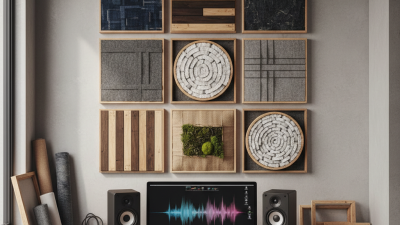
Choosing among China’s top DIY acoustic panels manufacturers requires more than comparing prices or product photographs. A panel may look attractive online, yet perform poorly if its core is too thin, its fabric is overly reflective, or its frame leaves unwanted gaps. This guide examines manufacturers through practical criteria, including material density, absorption performance, panel thickness, edge construction, customization, packaging, and quality control.

Dr. Floyd Toole, a respected researcher in audio and room acoustics, said, “The room is the most important component in the sound reproduction chain.” His observation remains highly relevant for home studios, podcast rooms, offices, classrooms, and entertainment spaces. Even excellent loudspeakers can sound harsh in a room with bare walls, glass surfaces, and hard flooring. Properly designed DIY acoustic panels can reduce flutter echoes and improve speech clarity. They cannot solve every acoustic problem.

That distinction matters.

The manufacturers discussed here are evaluated from a buyer’s perspective. We consider factory experience, technical documentation, fabric options, fire-safety information, sample availability, production consistency, and after-sales communication. Some companies may offer impressive customization but limited acoustic data. Others may provide reliable testing yet lack flexible designs. Neither option is automatically best.

Expect practical comparisons, not perfect conclusions. Supplier claims should be checked independently. Ask for test reports, installation guidance, and material samples before placing a large order. A small sample wall can reveal more than a polished catalog. That is often the uncomfortable truth.
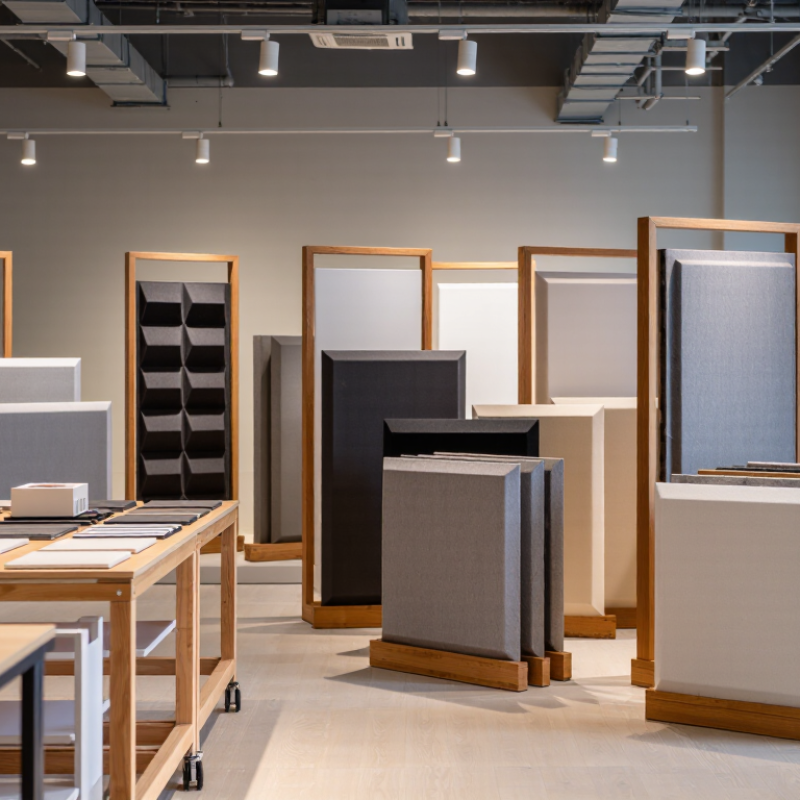
China Top 10 DIY Acoustic Panels Manufacturers?

What Makes a Leading DIY Acoustic Panel Manufacturer?

A leading DIY acoustic panel manufacturer does more than sell attractive, fabric-wrapped boards. It explains core materials, panel thickness, edge construction, and mounting methods in plain language. A 50-millimeter panel may reduce speech reflections differently from a thin decorative tile. Performance claims should match test data, with methods and frequency ranges clearly stated. A useful datasheet helps buyers compare products without guessing. Small details matter.

Tips: Request acoustic test reports, installation guides, and care instructions before ordering. Check that samples reflect production colors and finishes. Ask what tools and wall clearance installation requires; a DIY system should not conceal tricky cuts or unclear steps.

Consistency matters, too. Reliable manufacturers describe how they check dimensions and finish quality across batches, and provide practical support when installation questions arise. Acoustic panels can improve room sound, but they do not make a space fully soundproof. I would still test a small area first: even clear instructions may overlook an uneven wall or an awkward corner. A thoughtful manufacturer acknowledges those limits instead of promising perfect results.

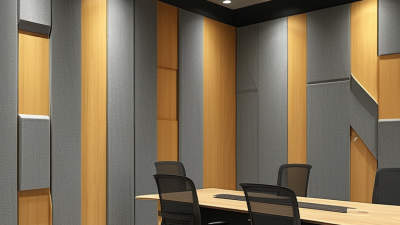
How China’s DIY Acoustic Panel Market Is Structured

China’s DIY acoustic-panel market is not a single, neatly defined industry. It sits between materials production, home-improvement retail, and small-scale room-treatment services. The National Bureau of Statistics of China reported an urbanization rate of 66.16% in 2023. That figure describes the wider housing context, not demand for acoustic panels directly. Still, apartments and shared walls make room comfort a practical concern.

Supply is divided by material and selling model. Domestic producers convert PET felt, foam, mineral fiber, or perforated wood into panels; some also supply cut-to-size kits and mounting hardware. Retailers and online sellers typically serve homeowners with standard sizes and simple installation instructions. Contract suppliers, meanwhile, tend to provide custom dimensions for studios, offices, and public interiors. The line is not always tidy. Some “DIY” products still require careful measuring, safe fixing, and a clear understanding of the room’s surfaces.

Grand View Research’s acoustic-insulation market report treats construction as an important application, but its broad category does not isolate DIY wall panels. That limitation matters. Absorption panels can reduce echo; they do not automatically block sound through walls. Buyers comparing products should look for stated test methods, material thickness, and mounting details, rather than relying on vague performance claims. Small gaps matter. A panel placed badly may look right and do little.

China’s Top 10 DIY Acoustic Panel Manufacturers Compared

China’s top ten DIY acoustic-panel manufacturers should be compared on tested performance, not catalog claims alone. Grand View Research estimated the broader global acoustic-insulation market at about US$14.9 billion in 2023, with projected growth through 2030. That figure covers more than DIY panels, so it signals market activity—not a panel-specific ranking. Useful checks include panel thickness, core material, fabric durability, minimum order quantity, and clear installation guidance. Ask whether absorption figures come from ASTM C423 or ISO 354 testing; mounting method and air gaps can change results. Small details count.

For a practical comparison, request the same sample size from each supplier and note its weight, edge finish, and ease of cutting. Compare reported absorption by frequency, not just one headline rating. A panel that performs well in mid-range speech frequencies may do less for low bass. Check whether test reports identify the exact product construction, and confirm that quoted lead times include packaging and shipping. The ten candidates may look similar online; their documentation often does not. I would treat missing test conditions as a real weakness, though a small workshop may simply lack polished paperwork. Samples help, but one room test is not a controlled laboratory result.

Key Products, Materials, and Customization Options

DIY acoustic panel manufacturers are expanding beyond simple fabric-wrapped foam. The market now includes polyester fiber, mineral wool, wood wool, recycled cotton, and perforated timber. A 2024 Grand View Research report valued the global acoustic insulation market at about USD 15.9 billion in 2023. It also forecast steady growth through 2030.

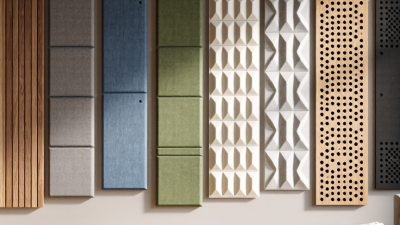
Material choice affects both sound control and installation safety. Polyester fiber panels are lightweight and easy to cut on site. Mineral wool usually delivers stronger absorption across speech frequencies. Wood wool adds visible texture, while perforated timber can combine absorption with a warmer interior appearance. The Acoustical Society of America notes that absorption ratings must be tested under controlled conditions. A high rating does not guarantee quietness in every room.

Customization often includes panel thickness, edge shape, printed surfaces, colors, ceiling clouds, and modular sizes. Many suppliers offer 600-by-600-millimeter modules for offices and studios. Some also provide CNC-cut patterns or removable mounting systems. These details matter during renovation. A panel that looks attractive may still leave low-frequency problems untreated. I have found that buyers often focus on the fabric first, then regret ignoring air gaps behind the panel. That mistake is common. Manufacturers should publish test methods, fire classifications, density, and installation limits. Data sheets without room-specific guidance remain incomplete.

How to Choose the Right Chinese Manufacturer for Your Project

China Top 10 DIY Acoustic Panels Manufacturers?

Choosing among China’s leading DIY acoustic panel manufacturers requires more than comparing online prices. Start with your room’s needs: speech clarity, echo control, panel thickness, mounting method, and available wall space. Ask each manufacturer for acoustic test reports, absorption ratings, material specifications, and fire-safety documentation from recognized laboratories. A clear technical sheet shows real expertise.

Request physical samples before placing a large order. Check the panel’s surface texture, edge cutting, color consistency, backing strength, and odor after unpacking. Measure the sample yourself. A claimed thickness of 25 millimeters may vary slightly, and small differences can affect installation. I once trusted product photos too quickly. The delivered color was acceptable, but the mounting clips were weak.

Communication is another practical test. Send a simple drawing with dimensions, quantity, packaging requirements, and installation photos. Reliable manufacturers should confirm tolerances, production time, carton protection, and replacement procedures in writing. Ask whether they can provide customized shapes without changing performance data. Be careful with unusually low quotes; they may exclude accessories, testing, or protective packaging. A factory visit or third-party inspection can reveal dust control, storage conditions, and quality checks that sales messages rarely show. Pay attention to response quality, not only response speed. Fast replies can still hide missing details.

China Top 10 DIY Acoustic Panels Manufacturers? - How to Choose the Right Chinese Manufacturer for Your Project

Anonymous comparison matrix for evaluating Chinese DIY acoustic-panel suppliers. Rankings are based on project suitability, documentation, customization, and quality-control capability rather than company names or brands.

Rank Manufacturer Profile Primary DIY Panel Type Typical Construction Common Thickness Typical Acoustic Performance Fire-Safety Documentation Customization Capability Best-Fit Project Key Verification Point Project Fit
1 Profile 01
Premium OEM
Fabric-wrapped absorbers Glass-fiber or mineral-fiber core with acoustically transparent fabric 25–50 mm NRC commonly targeted at 0.70–1.00, depending on thickness and mounting Request product-specific reports such as ASTM E84, EN 13501-1, or equivalent High: size, fabric, edge, logo, and packaging options Commercial interiors, studios, meeting rooms Confirm tested assembly, not only raw-core performance ★★★★★
2 Profile 02
PET Specialist
Recycled PET acoustic panels Decorative polyester-fiber board, often produced from recycled PET content 9–24 mm Moderate to high absorption; installation with an air gap can improve low-frequency performance Ask for fire classification, recycled-content statement, and formaldehyde or VOC information High: CNC cutting, printed surfaces, colors, patterns, and baffles Offices, schools, retail spaces, home studios Verify density, recycled content, color consistency, and edge quality ★★★★★
3 Profile 03
Wood-Finish
Micro-perforated wood or slatted panels Perforated or slatted wood face with acoustic fleece and absorptive backing 15–50 mm Performance depends strongly on perforation ratio, backing material, and cavity depth Request fire-retardant treatment details and a tested panel-system classification Medium to high: veneer, laminate, perforation, slat spacing, and module size Hospitality, executive offices, high-end residential projects Check veneer matching, moisture control, formaldehyde class, and warping tolerance ★★★★☆
4 Profile 04
Budget OEM
Basic fabric-wrapped wall panels Fiberglass, mineral-fiber, or polyester core with standard textile covering 25–50 mm Often suitable for speech-frequency control when correctly spaced on walls Documentation may be available only for selected fabrics or core materials Medium: standard colors, dimensions, cartons, and labels Residential rooms, small offices, podcast rooms Request a pre-production sample and inspect corner finishing ★★★★☆
5 Profile 05
Decorative
Geometric PET wall tiles Colored polyester-fiber tiles cut into hexagonal, linear, or custom shapes 9–12 mm Best for reducing reflections and reverberation in the mid and high frequencies Check reaction-to-fire testing and whether adhesive materials are included in the test High: shapes, colors, mixed layouts, kits, and installation templates DIY home offices, classrooms, creative spaces Confirm dimensional tolerance and color matching between production batches ★★★★☆
6 Profile 06
Ceiling Systems
Acoustic clouds and hanging baffles Vertical or horizontal PET, fiberglass, or mineral-fiber elements suspended from ceilings 12–50 mm Effective exposed surface area can provide strong room-level reverberation control Request fire documentation for the panel, suspension hardware, and any edge treatment High: shapes, suspension kits, cable length, colors, and printed graphics Open-plan offices, restaurants, classrooms, halls Verify load limits, hardware corrosion resistance, and installation instructions ★★★★☆
7 Profile 07
Studio Focus
Broadband absorber kits Thick porous absorber with fabric covering and optional timber frame 50–100 mm Greater thickness and a rear air gap generally improve low-frequency absorption Ask for full assembly testing and fabric flame-spread information Medium: thickness, frame, fabric, corner treatment, and mounting hardware Recording rooms, voice-over booths, music practice rooms Evaluate measured data by frequency band, not only a single NRC value ★★★★☆
8 Profile 08
Eco Materials
Wood-wool or natural-fiber panels Wood-wool, cellulose, or other fiber-based porous material, sometimes cement-bonded 15–50 mm Useful broadband absorption when installed with suitable backing and cavity depth Verify fire, moisture, mold, VOC, and binder information for the exact formulation Medium: panel size, paint finish, density, and edge profile Eco-conscious commercial and residential interiors Check fiber shedding, surface uniformity, odor, and humidity resistance ★★★☆☆
9 Profile 09
Fast Delivery
Standardized acoustic tiles and kits Predefined PET or fabric-wrapped modules packed in installation-ready sets 9–25 mm Suitable for basic echo reduction when coverage is adequate Usually depends on the selected material and production batch Low to medium: limited colors, fixed sizes, and standard packaging Small renovations and time-sensitive projects Confirm stock status, batch consistency, and replacement-panel availability ★★★☆☆
10 Profile 10
Project Custom
Mixed-material acoustic assemblies Combination of PET, fabric, wood, perforated surfaces, and absorptive backing 20–80 mm Can be optimized for aesthetics and broadband absorption through layered design Require project-specific fire, VOC, and acoustic testing for the final assembly Very high: engineering drawings, prototypes, colors, profiles, and packaging Large commercial fit-outs and architect-led projects Assess engineering support, sample approval process, and change-control procedures ★★★☆☆
Selection note: Acoustic values vary with panel thickness, mounting method, air gap, test standard, room conditions, and product configuration. Before placing an order, request a physical sample, technical datasheet, batch information, fire documentation, installation instructions, packaging details, and an acoustic report for the exact finished assembly.