Choosing the right wall treatment can change how a room feels, sounds, and functions. For global buyers, appearance is only one part of the decision. Acoustic performance, material quality, fire documentation, and installation requirements also deserve careful review. This guide examines ten decorative acoustic wall panels selected for varied commercial and residential applications. Each option is considered through practical details, including absorption ratings, surface finish, panel thickness, edge design, and maintenance needs.
Small differences matter. A felt panel may soften speech in a meeting room, while a slatted wood design can add warmth to a hotel lobby. Some products use recycled fibers, but sustainability claims should be supported by clear supplier evidence. Check technical data before relying on marketing language. The phrase acoustic wall panels decorative often describes appearance, not guaranteed sound control. That distinction is important.
No panel solves every acoustic problem. Room size, ceiling height, glazing, furniture, and background noise can change results. We have included these limitations rather than hiding them. In real projects, installation errors may reduce performance significantly. Buyers should request samples, confirm test methods, and compare regional compliance documents before placing an order. Supplier experience also matters, especially when shipping across borders or coordinating custom dimensions. Prices, lead times, and color consistency can shift unexpectedly. A thoughtful comparison is useful, but it cannot replace an on-site acoustic assessment. Consider this guide a dependable starting point, not a final specification.
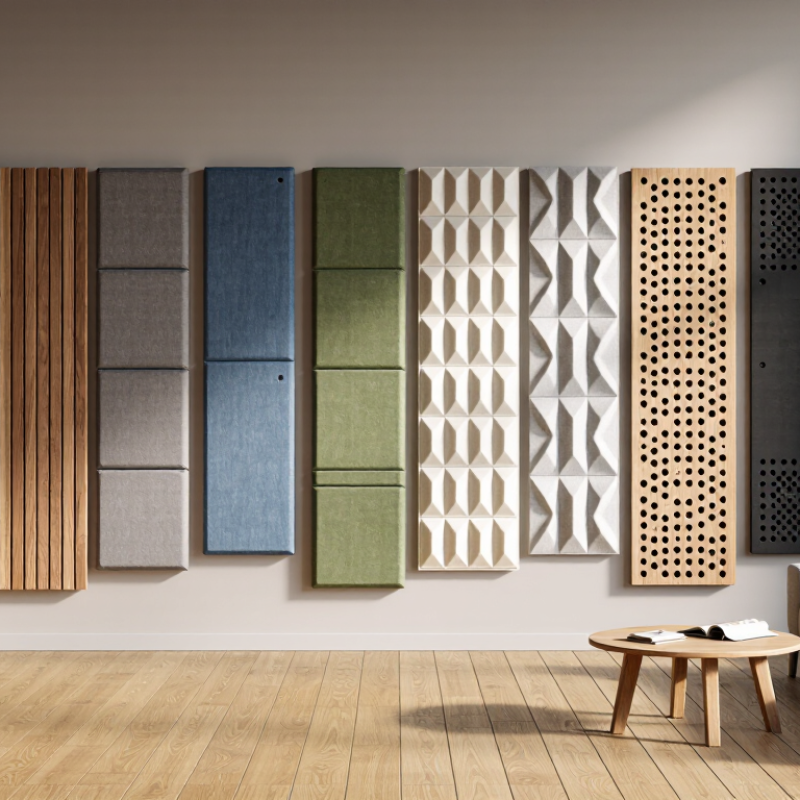
Decorative acoustic wall panels are interior surfaces designed to reduce reflected sound while improving visual comfort. They usually combine a sound-absorbing core with fabric, wood veneer, felt, or perforated finishes. Unlike soundproof barriers, they do not fully block noise between rooms. They mainly control echoes inside a space.
Performance depends on the material, thickness, mounting method, and room volume. The Noise Reduction Coefficient, or NRC, is commonly tested under ASTM C423 procedures. A panel rated NRC 0.80 can absorb substantial mid-frequency sound, but results vary by installation. Air gaps behind panels often improve low-frequency absorption. Small details matter.
The World Health Organization’s Environmental Noise Guidelines for the European Region recommend classroom indoor noise below 35 dB LAeq during teaching. Decorative panels cannot achieve that target alone. They can, however, support clearer speech in classrooms, offices, restaurants, and meeting rooms. Acoustical testing under ISO 3382 can measure reverberation time before and after installation.
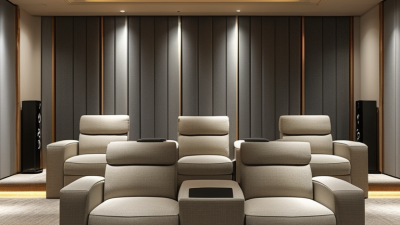
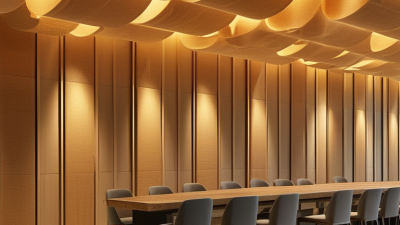
Material selection should match the room’s risks. Fabric panels suit offices, while moisture-resistant surfaces may fit hospitality areas. Slatted panels with acoustic backing create warmth, but their open gaps may leave some reflections untreated. This is where buyers often overestimate appearance. A beautiful wall can still sound harsh. Site measurements, product test reports, fire classifications, and installation guidance deserve careful review before purchasing.

Top 10 Decorative Acoustic Wall Panels for Global Buyers
A practical comparison begins with measured acoustic data, not appearance. Check the Noise Reduction Coefficient (NRC), but read the test frequency range carefully. A panel rated at 0.80 may perform differently across speech, music, and machinery noise. Thickness, density, edge treatment, and the wall air gap can change results. A 50-millimeter panel with a 50-millimeter cavity often absorbs more low-frequency sound than a thin panel mounted directly.
Material selection affects safety, durability, and maintenance. Recycled PET felt is lightweight and resists fiber shedding. Timber slats add warmth, while acoustic backing improves absorption between the slats. Mineral-based panels can provide strong performance, but installers must verify weight and fixing requirements. For humid interiors, request moisture data before choosing wood products. Also examine fire classifications, formaldehyde information, cleaning instructions, and independent laboratory reports based on recognized ISO or ASTM methods.
Design should support the room’s real use. In a meeting room, speech clarity matters more than dramatic visual texture. In a restaurant, cleanable surfaces may matter most. Ask for full-scale samples, because small swatches hide color variation and joint visibility. Do not trust a high acoustic rating alone. It may ignore installation quality, room volume, or untreated ceilings. One imperfect comparison is better than a confident guess. A supplier who explains test limits is usually more reliable than one offering only attractive images.
Comparative guide for common decorative wall-panel constructions. Acoustic ratings are typical product-range values and should be confirmed through laboratory test reports for the exact panel, mounting method, air gap, and frequency range.
| Rank | Panel Type | Primary Material | Typical Thickness | Typical Acoustic Rating | Best Frequency Range | Surface & Design Options | Environmental Profile | Typical Installation | Suitable Applications | Key Buying Considerations |
|---|---|---|---|---|---|---|---|---|---|---|
| 1 | PET Felt Acoustic Panel | Recycled polyethylene terephthalate fiber, usually molded or pressed into felt | 9–24 mm | NRC 0.35–0.85 Higher values generally require thickness, profiling, or an air gap. |
Mid to high frequencies; performance improves with a rear cavity | Flat Grooved Geometric Wide color range | Often available with recycled content; low dust and low fiber shedding when properly finished | Adhesive, concealed clips, or mechanical fasteners on a substrate | Offices, classrooms, hospitality interiors, meeting rooms, corridors | Check recycled-content percentage, colorfastness, cleanability, edge quality, and fire-test documentation |
| 2 | Fabric-Wrapped Fiberglass Panel | Rigid fiberglass or mineral-fiber core covered with acoustically transparent fabric | 25–50 mm | NRC 0.75–1.10 Commonly one of the strongest options for broadband absorption. |
Broadband absorption, including useful mid-frequency control | Custom fabric Printed graphics Wrapped edges Cloud-compatible | Durable core options are available; fabric and resin composition should be reviewed for emissions and recyclability | Z-clips, impaling clips, or concealed mechanical systems | Studios, conference rooms, auditoriums, restaurants, open-plan workplaces | Verify core density, fabric abrasion resistance, edge protection, impact resistance, and fire classification |
| 3 | Wood Slat Acoustic Panel | Wood veneer or melamine slats fixed over an acoustic felt or mineral-wool backing | 22–45 mm | NRC 0.45–0.85 Depends heavily on slat spacing, backing, and cavity depth. |
Mid and high frequencies; deeper cavities improve lower-frequency absorption | Oak-look Walnut-look Linear Natural finishes | Look for certified wood sources, low-emission adhesives, and formaldehyde-compliant boards | Screws through backing, battens, or concealed mounting rails | Restaurants, offices, libraries, hotels, residential feature walls | Compare veneer consistency, scratch resistance, slat spacing, moisture tolerance, and flame performance |
| 4 | Micro-Perforated Wood Panel | Perforated MDF, plywood, or veneer-faced board with an absorptive backing | 12–25 mm | NRC 0.45–0.80 | Mid frequencies; tuning is influenced by perforation ratio and cavity depth | Wood veneer Painted finish Fine perforation Large-format panels | Wood-based content can be sourced from certified forests; confirm board emissions and recycled content | Clips, screws, or concealed rails over a continuous acoustic backing | Auditoriums, cultural venues, executive interiors, education spaces | Review perforation ratio, backing material, panel tolerances, joint alignment, and access requirements |
| 5 | Perforated Metal Acoustic Panel | Perforated steel or aluminum facing with mineral wool or nonwoven acoustic infill | 25–50 mm | NRC 0.60–1.00 | Broadband performance when paired with a deep absorptive backing | Powder-coated Linear perforation Expanded metal Industrial style | Metal is durable and potentially recyclable; assess coating chemistry and infill containment | Suspended rails, Z-clips, or direct mechanical fixing | Transport hubs, schools, commercial interiors, high-traffic public areas | Check perforation percentage, corrosion resistance, panel weight, edge safety, and impact performance |
| 6 | Acoustic Baffle Wall Module | Vertically arranged PET felt, mineral fiber, or fiberglass modules | 40–100 mm | NRC 0.65–1.10 | Broadband absorption; exposed edges and air gaps increase effective area | Vertical fins Layered shapes Color blocks 3D layouts | Material efficiency can be good because both faces may absorb sound; confirm structural and fire requirements | Ceiling or wall-mounted tracks, brackets, or suspension systems | Open offices, foyers, cafeterias, atriums, multipurpose rooms | Consider projection depth, cleaning access, fixing strength, shadow gaps, and protection from impact |
| 7 | Acoustic Wall Tile | Pressed PET felt, recycled textile fiber, or composite porous fiber board | 6–18 mm | NRC 0.25–0.70 | Primarily mid and high frequencies; thicker tiles or spacers improve results | Hexagonal Chevron Brick layout Mix-and-match colors | Often lightweight and available with recycled fibers; verify adhesive emissions and end-of-life options | Peel-and-stick adhesive, contact adhesive, or concealed clips | Small offices, home offices, retail spaces, reception areas, creative studios | Compare tile density, adhesive reversibility, dimensional stability, stain resistance, and pattern accuracy |
| 8 | Slotted Mineral-Fiber Panel | Mineral fiber or wood-wool acoustic board with painted or factory-finished surface | 15–40 mm | NRC 0.55–0.95 | Mid-frequency absorption; cavity installation extends the effective range | Slotted Paintable Textured Continuous wall systems | Mineral or wood-fiber content may provide good durability; review binders, dust control, and moisture limits | Screws with washers, clips, or grid-compatible framing | Schools, offices, corridors, music practice rooms, community buildings | Check edge fragility, impact resistance, humidity tolerance, surface repairability, and fire test scope |
| 9 | Perforated Gypsum Acoustic Panel | Perforated gypsum board with acoustic fleece or mineral-fiber backing | 12.5–25 mm | NRC 0.45–0.80 | Mid-frequency absorption; cavity depth and backing density are significant | Seamless look Paintable Round holes Square holes | Primarily mineral-based and potentially durable; local repair and recycling practices vary | Framed screw fixing with joint treatment and painted finish | Permanent commercial interiors, theaters, education, healthcare spaces | Allow for skilled installation, dust control, joint finishing, weight, and maintenance access |
| 10 | Acoustic Cork Panel | Expanded or agglomerated cork granules, sometimes combined with a fiber backing | 10–40 mm | NRC 0.25–0.65 | Mid and high frequencies; thicker panels and rear cavities improve absorption | Natural texture Colored cork Pin-friendly Organic design | Renewable bark-based material; verify binder type, recycled content, odor, and moisture resistance | Adhesive, screws with washers, or a framed mounting system | Home offices, hospitality interiors, creative spaces, education, wellness areas | Compare granule size, surface sealing, indentation recovery, odor, dimensional stability, and fire classification |
Buyer note: NRC values are representative ranges rather than guarantees for every product. For international procurement, request the complete laboratory report, mounting configuration, fire classification, VOC or emissions documentation, moisture limitations, warranty terms, carton dimensions, and installation instructions before comparing quotations.
Decorative acoustic wall panels can make busy interiors quieter without looking institutional. For global buyers, the right choice depends on room use, climate, installation rules, and maintenance expectations. These ten options offer practical design directions: slatted wood, perforated timber, wrapped fabric, recycled PET felt, grooved MDF, micro-perforated metal, acoustic plaster, three-dimensional fiber panels, printed fabric panels, and moisture-resistant composite panels.
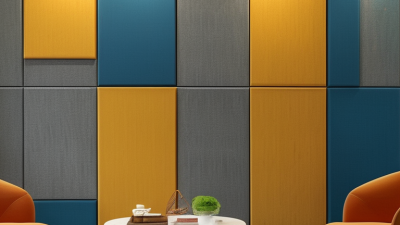
Slatted wood adds warmth to offices, hotels, and meeting rooms. Fabric panels soften echoes and provide many color choices. Recycled PET felt is lightweight and easy to cut on site.
Grooved MDF creates a refined linear texture, while micro-perforated metal suits durable commercial spaces. Acoustic plaster gives a nearly seamless ceiling or wall finish.
Three-dimensional fiber panels add shadows and visual movement. Printed fabric supports custom interiors, but image quality may vary. Moisture-resistant composites are useful in humid areas.
Every option has limits. I have seen attractive panels underperform when installers ignore wall gaps and edge sealing.
Tips:
Check independent acoustic data, not only decorative photographs. Compare NRC or equivalent test values. Confirm fire, VOC, and moisture documentation for your destination market. Request color samples under real lighting. A sample may reveal uneven texture, weak edges, or difficult cleaning. Consider replacement access, especially in high-traffic corridors. Local installation skill matters too. Sometimes the most beautiful option is not the most reliable one. Recheck the specification before ordering large quantities.
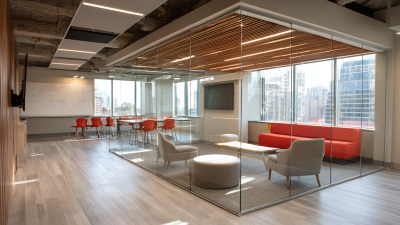
Choosing decorative acoustic panels starts with the room’s purpose, not its appearance. Open offices need speech control near desks and meeting areas. Restaurants need durable surfaces that tolerate cleaning and daily contact. Hotels often benefit from textured panels that reduce corridor echoes. In homes, fabric, wood-look, slatted, and felt panels can soften sound without making rooms feel clinical. Measure the wall, ceiling height, and main noise sources before selecting a pattern.
Material performance matters. Check acoustic test data, panel thickness, installation method, and cleaning instructions. For commercial projects, request verified fire-safety documents and confirm local building requirements. Moisture-resistant options suit kitchens, wellness rooms, and busy entrances. A small sample is essential. Colors can change under warm lighting. I once underestimated this effect, and the installed panels looked darker than expected. That mistake was avoidable.
Tips: Place panels where sound reflects first, such as opposite hard walls or behind seating. Use larger coverage for echo control, but avoid covering every surface. Combine decorative panels with carpets, curtains, or upholstered furniture. Compare maintenance needs before choosing delicate textures. Review the supplier’s technical documents carefully. Photos can mislead. A panel may look refined online but feel fragile in a real corridor. Residential buyers should also consider installation noise, dust, and future repairs. Global buyers need clear packaging details, stable dimensions, and reliable after-sales communication.
Choosing decorative acoustic wall panels involves more than comparing colors and prices. Buyers should request tested sound absorption data, panel density, dimensions, and surface-finish details. The numbers matter. A visually attractive panel may perform poorly in a large, reflective room.
Installation conditions vary across markets. Measure the wall carefully, including doors, outlets, and ventilation grilles. Leave practical access for maintenance. Many panels can use adhesive, mechanical clips, or a supporting frame, but the wall surface must be clean, dry, and reasonably flat. In humid regions, allow materials to acclimatize indoors before installation. Small gaps can become visible after temperature changes.
Sourcing requires clear technical documents. Ask for fire classification, formaldehyde or VOC information, packaging details, and batch consistency. These records help with local approvals and reduce customs delays. Confirm whether the supplier can provide replacement panels in matching colors. That detail is often overlooked. Request a sample before placing a large order, then inspect its edges, color, backing, and actual installation method. Ten attractive options may still differ greatly in lead time and tolerance. Shipping damage is another practical risk, so use reinforced cartons and photograph the cargo before unloading. I would not rely only on catalog images; printed colors and room acoustics can mislead. A small test area usually reveals more than a confident sales promise.