Noise rarely arrives as one simple problem. A low rumble from traffic, voices through a shared wall, and footsteps overhead each travel differently. The right material depends on where the sound enters and what kind of noise you hear. A foam panel may soften echoes inside a room, but it usually cannot stop a neighbor’s television. That distinction matters.
This guide explains how to compare materials for sound proofing, from dense drywall and mineral wool to door seals and acoustic panels. It also considers how sound moves through gaps, ceilings, floors, and lightweight walls. For voices, sealing cracks around an outlet or door may help more than covering a large wall with thin foam. For impact noise, floor layers or ceiling assemblies may be more relevant. Measure first. Notice when the noise is loudest, and check for visible gaps before buying materials.
The sections that follow will cover sound absorption, sound blocking, cost, installation, and room-specific needs. Product ratings can help, but results depend on the full assembly, workmanship, and existing construction. A material rarely works alone. In practice, combining mass, airtight sealing, and suitable insulation may be more effective than relying on one product. Still, every building is different, and a small treatment may disappoint if the main path is elsewhere. That is worth remembering. Use the comparisons here as a starting point, then match them to your room, budget, and noise source.
How to Choose the Best Soundproofing Materials
Identify the Noise Type and Soundproofing Goal
Before choosing a material, identify where the noise comes from and how it reaches the room. Stand quietly near the wall, window, or ceiling when the sound occurs. Is it conversation, traffic, footsteps, or a low rumble? Airborne sounds, such as voices, usually pass through gaps or lightweight surfaces. Footsteps and dropped objects create impact noise that travels through floors and framing. Low-frequency sounds can be especially stubborn. Listen closely.
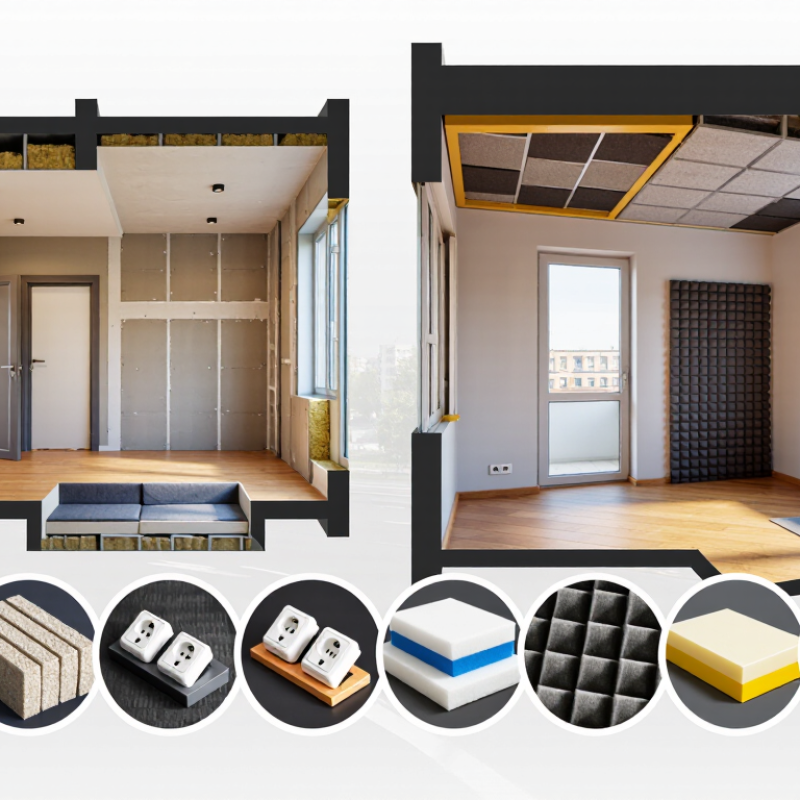
Your goal matters just as much. If street noise leaks around a window, sealing gaps and improving the window assembly may help more than adding foam to a wall. For voices through a shared wall, added mass and a decoupled wall assembly can reduce transmission; soft acoustic panels mostly control echoes inside the room. For footsteps, consider floor underlayment or a suitable ceiling assembly, while remembering that structure-borne noise can bypass a single treatment. Note when the noise is loudest and check likely gaps with a flashlight. This is not a perfect test, and one visit may miss a hidden path. Choose materials for the specific sound and surface, then set a realistic target: quieter, not necessarily silent.
| Noise Type | Typical Goal | Materials to Consider | Where They Help Most | Key Limitations |
|---|---|---|---|---|
| Airborne speech, television, or music through a wall | Reduce sound passing through the wall | Additional layers of gypsum board, a decoupled wall assembly, cavity mineral wool, and acoustic sealant | Wall upgrades where sound leaks through the wall surface, framing, or perimeter gaps | Mineral wool absorbs sound inside a cavity but does not block sound effectively on its own. Results depend on the complete assembly and careful sealing. |
| Low-frequency noise, such as bass or machinery hum | Reduce sound transmission and vibration | Added mass, separated framing, vibration-isolation mounts, and sealed penetrations | Walls, ceilings, or enclosures where structure-borne vibration or bass is a concern | Low frequencies are difficult to control and may travel through floors, ceilings, and connected structures. Thin foam panels are generally ineffective as a sound barrier. |
| Impact noise, such as footsteps or dropped objects overhead | Limit vibration traveling through the building structure | Resilient ceiling channels or clips, isolation mounts, and an appropriate floor underlayment | Ceilings below noisy rooms or floors receiving new finish materials | Impact noise is structure-borne, so adding soft material to a ceiling surface alone may have limited effect. Floor construction and installation details matter. |
| Noise entering through a door or its perimeter | Close air gaps and improve the door barrier | Compression weatherstripping, a door sweep, perimeter seals, and a solid, well-fitted door | Entry doors, room doors, and other openings with visible gaps | Seals cannot compensate for a poorly fitted frame or a lightweight door. Any remaining gaps can significantly reduce performance. |
| Outdoor traffic or neighborhood noise through windows | Reduce airborne sound entering through glazing and frame gaps | Laminated glazing, secondary glazing, well-sealed frames, and suitable perimeter seals | Windows facing roads, public spaces, or other persistent outdoor noise sources | Performance depends on the complete window assembly, including the frame and installation. Small gaps can undermine an otherwise improved window. |
| Echo and reverberation inside a room | Make the room sound less reflective and improve speech clarity | Fabric-wrapped acoustic panels, ceiling absorbers, curtains, and other sound-absorbing finishes | Rooms with hard floors, bare walls, or noticeable echo | Absorbers improve room acoustics but generally do not stop much sound from entering or leaving the room. |
| Noise passing through cracks, outlets, or service openings | Seal leakage paths in an existing construction | Acoustic sealant and appropriate gaskets or seals around openings | Wall perimeters, pipe penetrations, and other small gaps | Sealant is for gaps and joints, not a substitute for a wall, door, or window sound barrier. Follow electrical and fire-safety requirements around services. |
Selection tip: Identify whether the problem is airborne noise, impact vibration, or room echo before choosing a material. Sound isolation usually depends on a complete system—mass, airtightness, and, where appropriate, structural separation—not on a single product.