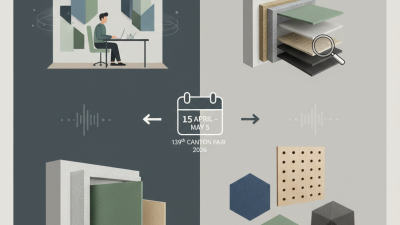
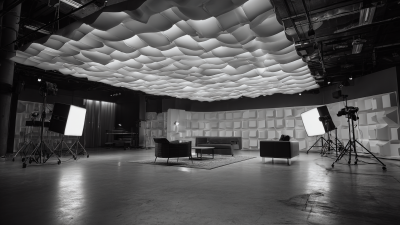
Choosing sound proofing materials for global sourcing requires more than comparing prices, thicknesses, or attractive product photographs. Noise affects health, concentration, sleep, and workplace performance. The World Health Organization’s Environmental Noise Guidelines for the European Region recommend limiting road traffic noise below 53 dB Lden and 45 dB at night. These figures turn acoustics into a measurable procurement issue, not a design preference.
The global soundproofing market is expanding. Grand View Research reports continued growth, driven by construction, transport, industrial facilities, and commercial interiors. Yet market size alone cannot identify a reliable supplier. Buyers should examine laboratory test methods, Sound Transmission Class ratings, Noise Reduction Coefficients, density, fire performance, VOC data, and installation requirements. ISO 10140 and ASTM E90 are useful references for comparing airborne sound insulation. Always check whether test results describe the exact product, thickness, and assembly being offered.
Acoustics specialist Ethan Winer states, “The best way to soundproof a room is to build a room within a room.” This principle highlights mass, separation, and airtight construction. Absorbing foam may reduce echo, but it rarely blocks serious external noise. That distinction is often missed.
Small details matter. A two-millimeter gap can weaken an otherwise expensive barrier. A supplier may provide impressive certificates, but incomplete test conditions still create uncertainty. I would question unusually low prices, unclear recycled content, and delivery promises without packaging specifications. Global sourcing is never perfectly predictable. The better approach combines verified data, physical samples, factory audits, and realistic installation planning.
How to Choose Sound Proofing Materials for Global Sourcing?
Define Soundproofing Goals and Performance Requirements
Effective global sourcing begins with a clear noise problem, not a product search. Identify whether the project involves voices, machinery, traffic, or footstep impact. Each source travels through rooms differently.
In my sourcing experience, buyers often request “maximum soundproofing” without defining a measurable target. That phrase creates confusion. Set a required sound reduction level, such as 35 or 50 decibels, and identify important frequency ranges. Low-frequency equipment noise may need heavier barriers, while speech often requires absorption and airtight construction.
Measure the room, wall thickness, ceiling height, and installation space. A dense panel may perform well in a laboratory but fail around gaps, doors, or electrical outlets. Small leaks matter.
They really do.
For global suppliers, request tested performance data, installation instructions, material density, fire classification, moisture resistance, and tolerance ranges. Compare reports using recognized test methods, such as ISO or ASTM procedures, but check whether laboratories and test assemblies are genuinely comparable. Certificates alone are not enough.
I once focused too heavily on panel weight and underestimated edge sealing. The result was disappointing. That mistake changed my evaluation checklist. Performance must be judged as a complete system, including framing, fasteners, seals, and workmanship. Also confirm packaging strength, storage conditions, and shipping temperature. A material damaged before installation cannot meet its rated performance.
Soundproofing materials should be compared by function, not appearance or thickness alone. Absorptive panels reduce echoes inside a room, while dense barriers help block airborne noise. Resilient channels and isolation mounts reduce vibration moving through walls, ceilings, and floors. For impact noise, such as footsteps, examine IIC ratings. For airborne speech or equipment noise, review STC ratings. NRC indicates how well a surface absorbs sound, but it does not measure sound blocking. These ratings are useful, yet laboratory results may differ from performance on a busy construction site.
Tips: Ask suppliers for complete test reports, material density, thickness, fire documentation, and installation instructions. Check whether tests follow recognized standards, because rating systems vary between markets. A heavy barrier may perform poorly if installers leave gaps around sockets or doors. Small openings matter. During global sourcing, confirm packaging strength and moisture resistance too. I once underestimated shipping humidity, and several porous samples arrived damaged. That mistake changed the evaluation process.
Compare products under the same conditions. Record the target frequency range, wall design, available space, and local building requirements. Flexible materials can improve isolation, but they may need careful support. Absorption materials are easier to install, though they cannot replace a complete partition system. Also question unusually high ratings. They may reflect ideal laboratory assemblies rather than real rooms. A practical supplier should explain limitations, provide repeatable data, and accept technical questions without vague promises. Reliable decisions come from matching the material to the noise path, not choosing the highest number.
Choosing soundproofing materials for global sourcing starts with the building application. Wall systems need materials that reduce airborne speech and traffic noise. Ceiling assemblies may require lighter products with stable acoustic performance. Machinery rooms need vibration control, impact resistance, and strong fire protection.
Compare acoustic ratings carefully. The Noise Reduction Coefficient measures sound absorption, while the Sound Transmission Class reflects airborne noise control. These ratings describe different behaviors. A dense barrier can block sound, but it may perform poorly without sealed joints. Fibrous insulation can absorb reflected noise inside a cavity. It cannot replace a continuous wall barrier. Details matter.
For bathrooms, basements, and coastal projects, moisture resistance deserves close attention. Check water absorption, mold resistance, temperature limits, and dimensional stability. Request independent laboratory reports using recognized testing methods, such as ISO or ASTM procedures. Also verify fire classification, recycled content claims, and installation tolerances. Global shipments may face changing humidity and long storage periods. Packaging should protect edges from compression and moisture.
I once preferred a thicker panel because its brochure showed stronger absorption. On site, it created clearance problems around doors and services. The thinner assembly worked better after sealing gaps. That result surprised me. Product data still needs practical testing. Ask suppliers for samples, installation drawings, batch consistency records, and test reports matching the final assembly. Do not guess. A material is suitable only when its measured properties, site conditions, and installation method agree.
How to Choose Sound Proofing Materials for Global Sourcing?
Global sourcing should begin with measurable performance, not attractive material samples. Ask suppliers for laboratory reports based on ISO 10140 and ISO 717-1, or ASTM E90 and ASTM E413. These standards measure airborne sound insulation under controlled conditions. Check the tested thickness, density, mounting method, and frequency range. A report for a 50-millimeter panel cannot automatically support a 25-millimeter specification.
Certification also needs careful review. The 2022 ISO Survey recorded 1,265,216 ISO 9001 certificates worldwide. This shows broad quality-system adoption, but certification does not prove acoustic performance. Verify the certificate number, scope, issuing body, and expiry date. For building applications, request fire classification evidence under EN 13501-1. Environmental documents should match destination-market requirements, including restricted-substance declarations where applicable. Some suppliers provide impressive files. Their traceability may still be weak.
Supplier quality becomes visible during production. Request incoming-material records, batch numbers, calibration certificates, and final inspection data. Compare samples with mass-production goods. Measure thickness and surface condition at several points, because small density changes can affect results. The World Health Organization’s 2018 guidelines recommend limiting road-traffic noise below 53 dB Lden and 45 dB at night. That target reminds buyers that product selection must reflect the actual building environment. I once would have trusted a single test report too quickly. That approach misses installation errors, aging, and transport damage. On-site validation remains necessary.
| Material Category | Typical Acoustic Function | Indicative Performance Data | Common Applications | Relevant Test Standards | Safety and Environmental Checks | Supplier Quality Evidence to Request |
|---|---|---|---|---|---|---|
| Mineral Wool Acoustic Panels | Sound absorption; reduces reverberation and reflected noise rather than blocking all sound transmission. | Noise Reduction Coefficient (NRC) commonly ranges from approximately 0.70 to 1.00, depending on thickness, density, facing, and installation. | Ceilings, wall panels, studios, offices, classrooms, and industrial enclosures. | ISO 354 or ASTM C423 for sound absorption; ISO 10140 or ASTM E90 for laboratory sound insulation where applicable. | Check reaction-to-fire classification under EN 13501-1 or ASTM E84 results; verify fiber binder, formaldehyde emissions, and handling requirements. | Recent third-party test reports, batch density records, thickness and dimensional inspection reports, facing adhesion results, and installation instructions. |
| Polyester Fiber Acoustic Panels | Broadband absorption for speech, office, education, and interior acoustic control. | NRC values often range from approximately 0.45 to 0.95, influenced by thickness, edge profile, air gap, and mounting method. | Wall clouds, room dividers, meeting rooms, open-plan offices, and public interiors. | ASTM C423 or ISO 354 for absorption; ASTM E84 or EN 13501-1 for fire behavior, subject to product construction. | Confirm recycled-content claims, indoor-air-emission testing, colorant safety, fire classification, and resistance to delamination. | Material composition declaration, color consistency records, production samples, dimensional tolerance data, fire test report, and packaging drop-test records. |
| Acoustic Foam | Absorbs mid- and high-frequency reflections; generally not a complete solution for low-frequency isolation or sound blocking. | Absorption performance varies significantly; published NRC values must be linked to a defined thickness, profile, mounting method, and test standard. | Recording rooms, broadcast spaces, equipment rooms, and controlled indoor environments. | ISO 354 or ASTM C423 for absorption; ASTM E84 or EN 13501-1 for reaction to fire where required. | Verify foam chemistry, smoke development, flame spread, VOC emissions, UV stability, and resistance to crumbling or shrinkage. | Full formulation disclosure under applicable confidentiality terms, independent fire report, aging test, dimensional stability data, and production-batch traceability. |
| Mass-Loaded Vinyl Barrier | Sound transmission reduction through added surface mass; commonly combined with absorptive layers. | Performance depends on surface mass, frequency, joints, flanking paths, and installation. Request transmission-loss data across frequency bands rather than a single rating. | Walls, floors, ceilings, machinery enclosures, vehicle interiors, and pipe or duct applications. | ASTM E90 or ISO 10140 for airborne sound insulation; ASTM E413 or ISO 717-1 may be used for rating calculations. | Check plasticizer content, heavy-metal restrictions, odor, VOC emissions, temperature range, flexibility, and compatibility with adhesives. | Surface-mass verification, tensile and tear-strength data, low-temperature flexibility results, chemical-compliance declaration, and joint-sealing procedure. |
| Acoustic Fabric or Microperforated Facing | Protective and decorative facing that allows sound energy to reach an absorptive core. | Acoustic performance is system-dependent; open area, airflow resistance, backing material, and mounting cavity affect absorption. | Wrapped wall panels, ceiling systems, screens, theaters, hospitality interiors, and transportation interiors. | ISO 354 or ASTM C423 for the assembled acoustic system; abrasion and colorfastness tests should match the intended application. | Check fire performance, colorfastness, abrasion resistance, cleanability, mildew resistance, and indoor-air emissions. | Fabric construction specification, air-permeability data, color approval sample, fire report for the complete assembly, and inspection criteria for wrinkles and seams. |
| Acoustic Sealant and Perimeter Gasket | Reduces leakage at joints, penetrations, doors, frames, and panel interfaces; supports the performance of the entire sound-control assembly. | No single NRC value applies. Effectiveness depends on continuous installation, substrate compatibility, movement capability, and joint design. | Partition perimeters, door frames, service penetrations, ductwork, and prefabricated acoustic modules. | ASTM E90, ISO 10140, or project-specific laboratory testing for the complete assembly; ASTM C920 may apply to elastomeric sealants. | Review VOC emissions, curing chemistry, adhesion, movement capability, temperature range, shelf life, and compatibility with adjacent materials. | Technical data sheet, safety data sheet, batch number, shelf-life controls, adhesion test results, application-temperature limits, and a documented nonconformance process. |
| Perforated Wood or Metal Acoustic Panels | Resonant or porous absorption system, typically using perforations or slots with an absorptive backing and air cavity. | Performance changes with perforation ratio, panel thickness, backing, cavity depth, and frequency range; system-level test data is essential. | Auditoriums, restaurants, offices, transport facilities, cultural buildings, and premium interiors. | ISO 354 or ASTM C423 for absorption; EN 13501-1 or ASTM E84 for fire classification, depending on market requirements. | Check formaldehyde or VOC emissions for wood products, corrosion resistance for metal, coating durability, fire treatment, and moisture behavior. | Perforation and dimensional inspection, coating or veneer approval sample, moisture-content records, fire documentation, packaging protection, and installation tolerances. |
| Vibration-Isolation Mounts and Resilient Channels | Decouples structures and reduces structure-borne vibration and impact transmission; not a substitute for room absorption. | Performance is load- and frequency-dependent. Request dynamic stiffness, deflection, load range, and resonance data. | Floating floors, suspended ceilings, machinery supports, partition systems, and equipment rooms. | ISO 10846 for transfer stiffness testing may be relevant; project-specific impact or vibration tests may also be required. | Verify load safety factor, fatigue resistance, corrosion protection, temperature range, elastomer compatibility, and long-term creep behavior. | Load-deflection curves, dynamic-stiffness test results, material certificates, corrosion test records, installation drawings, and lot traceability. |
| Composite Acoustic Door or Window Assembly | Controls sound transmission through openings, which can otherwise become a major weak point in an acoustic envelope. | Use laboratory sound-transmission ratings for the complete installed assembly; results depend on seals, glazing, frame, hardware, and installation. | Recording facilities, plant rooms, offices, test rooms, hotels, and building acoustic partitions. | ASTM E90 and ASTM E413, or ISO 10140 and ISO 717-1, for airborne sound insulation of the complete assembly. | Check fire, smoke, safety glazing, air leakage, hardware durability, acoustic seal compression, and accessibility requirements. | Complete assembly test report, leakage test, hardware schedule, seal replacement instructions, dimensional inspection, and site-installation quality checklist. |
| Recycled Rubber or Cork Underlayment | Reduces impact noise and vibration beneath flooring; airborne sound performance depends on the overall floor-ceiling construction. | Request impact-sound test results, dynamic stiffness, compressive creep, thickness recovery, and load-bearing data. | Residential floors, offices, fitness areas, studios, and equipment-support zones. | ISO 10140-3 or ASTM E492 for impact sound testing of floor assemblies; ISO 16283-2 may apply to field measurements. | Check odor, VOC emissions, moisture resistance, fire behavior, recycled-content documentation, and compatibility with adhesives and floor finishes. | Density and thickness reports, compression-set results, moisture data, environmental declarations where available, roll-length inspection, and installation guidance. |
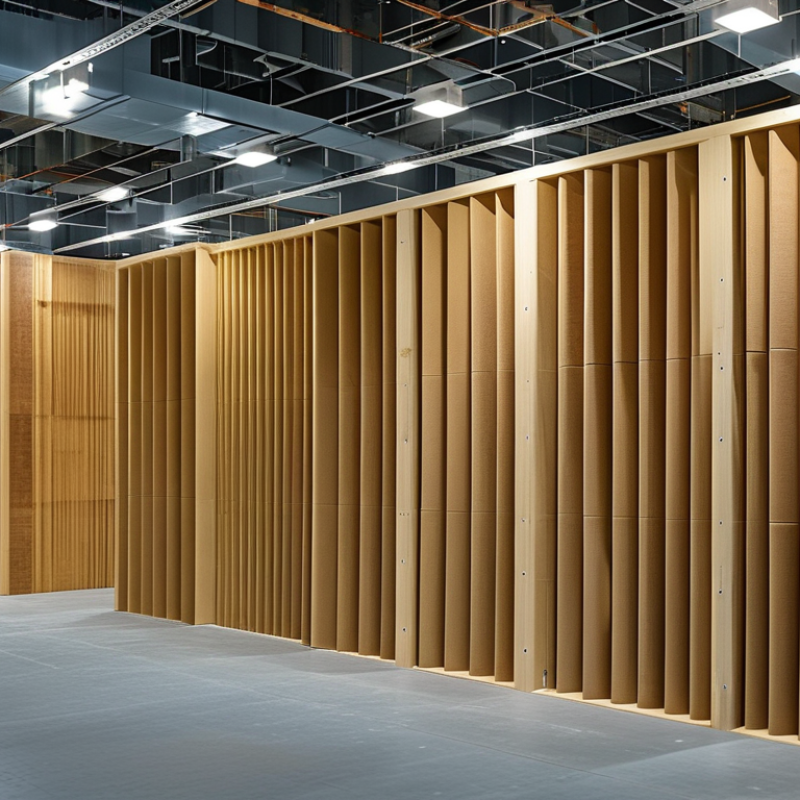
Global sourcing note: Performance values are indicative ranges or verification requirements, not universal product guarantees. Always compare products using the same test method, frequency range, thickness, mounting condition, and complete assembly design. Certification and compliance documents should be current, traceable to the supplied product, and issued by a competent independent laboratory or recognized certification body.
A low unit price can hide expensive decisions. When comparing soundproofing materials, calculate material, packaging, freight, insurance, duties, storage, and installation costs. A dense acoustic barrier may perform well, but its weight can raise ocean freight charges. Lightweight panels reduce shipping volume, yet they may require additional layers or framing. Measure the final installed cost, not only the supplier’s quotation.
Request technical data before placing a global order. Check thickness, density, sound transmission ratings, fire performance, moisture resistance, and acceptable temperature ranges. Confirm whether test results match your wall, ceiling, or machinery enclosure. A laboratory rating does not guarantee the same result on a poorly sealed site. Ask for samples, then test them against doors, joints, vents, and service openings.
Installation details often decide performance. Calculate labor hours, cutting waste, fasteners, sealants, protective equipment, and access requirements. Some materials need dry storage, flat stacking, or acclimatization before installation. Confirm pallet dimensions and lifting limits with the logistics team. I once underestimated handling space around ceiling panels; the schedule slipped by two days. That mistake was avoidable. Build a small contingency for damaged cartons, inaccurate measurements, and local labor differences. Also verify whether installers understand the material’s safety and handling instructions. A cheaper product is not economical if workers need unfamiliar tools or repeated corrections.