10 Tips for Choosing Soundproof Wall Panels
Choosing soundproof wall panels requires more than matching colors to a room. The right solution depends on sound frequency, wall construction, installation quality, and the actual noise source. A panel that absorbs voices may not block bass from a neighboring studio. That distinction matters.
The World Health Organization’s Environmental Noise Guidelines recommend keeping nighttime outdoor noise below 40 dB Lnight to reduce serious health risks. The U.S. Environmental Protection Agency also links excessive noise with sleep disruption, stress, and reduced comfort. These findings make acoustic control a practical building concern, not merely a design preference. Laboratory standards, including ASTM E90 and ISO 10140, help measure airborne sound insulation. Yet ratings can change after installation. Gaps around sockets, doors, and ceiling edges often become acoustic shortcuts.
Professor Trevor Cox, an acoustician and author, has said, “Sound is all around us, but we rarely pay attention to it.” His observation fits this topic perfectly. Good soundproof wall panels should be selected through measurement, not guesswork. Look closely at NRC values, fire performance, panel thickness, mounting methods, and independent test documentation. Also examine the room itself. Bare plaster, glass, and hard flooring can create sharp reflections, while furniture and fabric may soften them.
The process is imperfect. Product labels can sound more impressive than real results. A careful installer still matters. These ten tips will help compare materials, identify misleading claims, and build a quieter space with realistic expectations.
Define Your Soundproofing Goals and Identify Noise Sources
Before choosing soundproof wall panels, define the problem in practical terms. Identify what you hear, where it appears, and when it becomes disruptive. Speech may enter through a shared wall, while traffic noise may pass through windows or weak seals. Heating systems often create a steady, low hum. Footsteps and furniture movement can travel through the building structure.
Measure the room before buying anything. Use a phone recording to compare noise levels at different walls, corners, and ceiling areas. Record during morning traffic, evening conversations, and quiet hours. Note whether the sound is airborne, reflected, or transferred through the structure. Do not rely on memory. Small observations often reveal the true noise path.
My early mistake was treating every noise problem with absorption panels. They reduced echo but did little against the neighbor’s television. Acoustic panels mainly control reflections inside a room; they do not automatically block sound passing through a wall. For stronger results, inspect gaps around outlets, doors, vents, and baseboards. A professional assessment can also identify flanking paths that are easy to miss. Choose panel thickness and placement after this inspection, not before. A beautifully covered wall may still leave the main source untouched.
10 Tips for Choosing Soundproof Wall Panels
Define Your Soundproofing Goals and Identify Noise Sources
Typical indoor noise levels vary by distance, room construction, and operating conditions. Use these approximate A-weighted sound levels to identify the dominant noise source before selecting wall panels. The planning targets indicate practical indoor levels that may require a combination of absorption, sealing, mass, and structural isolation rather than wall panels alone.
Compare Soundproof Wall Panel Materials and Acoustic Performance
10 Tips for Choosing Soundproof Wall Panels
Start by separating sound absorption from sound blocking. Porous mineral wool panels often deliver NRC values around 0.90 to 1.00, when tested under ASTM C423. They reduce reflections, especially across speech frequencies. PET-fiber panels commonly test near NRC 0.70–0.95, depending on thickness and density. Perforated wood panels can look warmer, but their performance depends heavily on the backing cavity. The ISO 354 standard measures laboratory absorption, not complete room isolation.
Thickness changes the result. A 25 mm panel may control echoes, while a 50 mm panel with an air gap usually absorbs lower frequencies more effectively. ASHRAE Handbook—HVAC Applications explains that porous absorbers work best at mid and high frequencies. Bass needs depth, mass, or engineered resonators. Do not treat a high NRC as an STC rating. ASTM E90 and ASTM E413 address wall transmission loss and sound transmission class more directly.
I learned this after installing thin panels beside a noisy meeting room. Speech became clearer, yet low-frequency vibration remained. That result was disappointing, but useful. Check independent laboratory reports, test frequency bands, edge details, fire classification, and installation conditions. Ask whether the quoted NRC includes an air gap. It matters. Performance can also decline when furniture, doors, or ceiling paths are ignored. Some product tables look precise, but real rooms rarely behave perfectly. Examine reverberation time using ISO 3382 guidance before choosing panel coverage.
Choose the Right Panel Size, Thickness, and Surface Design
Choosing soundproof wall panels starts with understanding what they can realistically do. Most panels absorb reflected sound rather than block noise through a wall. For true sound isolation, sealed joints, wall mass, and structural design matter more.
Start with the panel size. Large panels cover more reflective area and create a steadier acoustic effect. Small panels offer flexible placement around desks, speakers, or artwork. In a home office, I often place panels near the speaking position and opposite the main sound source. The room sounded clearer.
However, I placed too few panels in one test, and the corners still produced harsh echoes.
Thickness also deserves careful attention. Thin panels can soften high frequencies, but they may leave voices sounding sharp. Thicker panels generally absorb a wider frequency range, especially when installed with a small air gap.
Do not assume thicker always means better. Excessive coverage can make a room feel unnaturally dull.
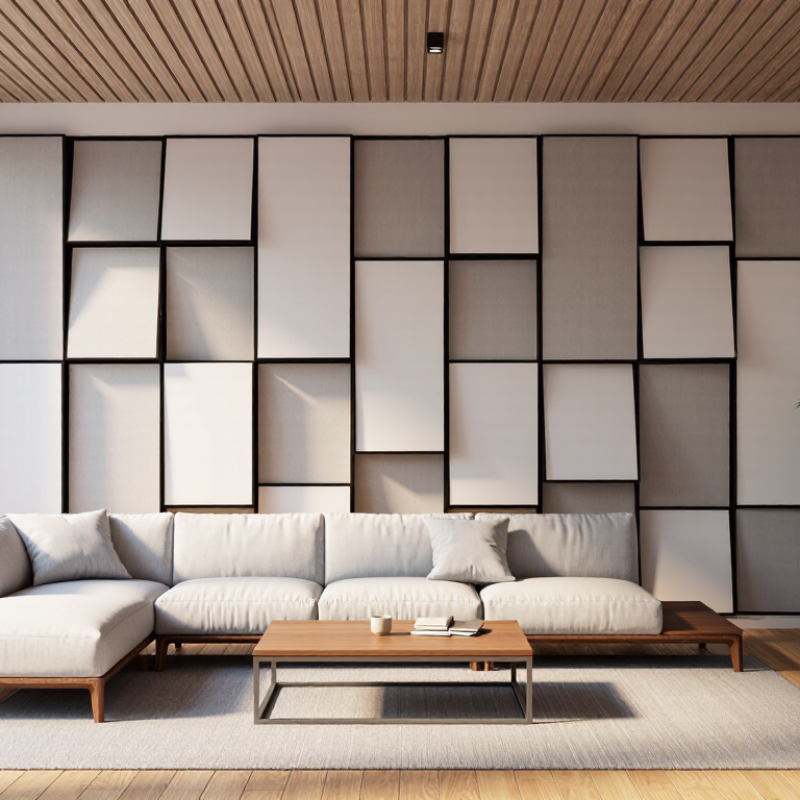
Surface design affects both performance and daily use. Fabric finishes can provide a softer appearance and reduce visual glare. Perforated or grooved surfaces may improve diffusion while adding texture. Choose a design that suits the room’s lighting and cleaning needs.
A beautiful panel still fails if dust collects in difficult grooves. Review the room after installation, because real furniture, windows, and flooring can change the result.
Check Installation Methods, Room Compatibility, and Maintenance Needs
Choosing Soundproof Wall Panels: Installation, Compatibility, and Maintenance
Soundproof wall panels can improve speech clarity, but installation determines much of the result. In real rooms, gaps around edges often reduce performance. Check whether panels use adhesive, clips, rails, or mechanical fasteners. Adhesive suits smooth, stable walls. Clips work better when panels may need removal. For masonry, test the surface before drilling. Dusty paint can weaken every fixing. Keep a small sample area. This step is easy to skip.
Tip: Match the panel to the room, not the advertisement. A recording room may need broadband absorption, while a busy office may need controlled echo and impact resistance. Measure wall area, ceiling height, humidity, and furniture before ordering. Soft panels can struggle in damp rooms unless their construction tolerates moisture. Fire performance also deserves verification through dependable technical documents. Do not assume a thick panel blocks outside noise. Absorption and sound isolation are different jobs. I once overestimated a panel because the room sounded quieter, but voices still passed through the thin partition.
Tip: Plan maintenance before installation. Leave access to outlets, vents, and inspection points. Choose surfaces that can be vacuumed gently or wiped without damage. Inspect corners every few months for lifting, stains, or loose hardware. Replace damaged sections promptly. Small defects spread. Keep installation records and care instructions nearby. However, maintenance advice is not universal; fabric, wood, and foam need different methods. Test cleaners on an unseen area first. A practical plan may be less attractive, but it usually lasts longer.
Evaluate Safety, Sustainability, Cost, and Overall Product Value
Choosing soundproof wall panels requires more than comparing thickness and appearance.
Check the panel’s tested acoustic rating, installation method, and coverage area. Confirm whether it absorbs echoes or truly reduces sound transfer; these functions are different. Review fire-safety certifications, formaldehyde or VOC emissions, and edge stability. A panel that smells strongly in a small meeting room deserves caution.
Ask how the material is made.
Recycled fibers can reduce waste, but recycled content alone does not prove sustainability. Look for transparent material disclosures, responsible packaging, and a realistic service life. Consider cleaning requirements, moisture resistance, and whether damaged sections can be replaced individually. My early mistake was choosing a low-cost panel without checking its mounting hardware. Installation took longer than expected, and labor erased much of the saving. Measure twice.
Compare the full cost, not just the price per panel.
Include delivery, cutting, fasteners, professional installation, maintenance, and future replacement. Request independent test reports rather than relying on vague claims. Speak with an acoustic consultant when speech privacy or neighboring-room noise matters. In a real office, I would clap near hard corners, record the reverberation, and test one sample before ordering a full wall. Small details matter. Also inspect warranties, supplier support, and disposal options. The most valuable product is not always the cheapest or thickest; it is the one that performs safely, lasts well, and fits the room’s actual acoustic problem.