How to Choose the Best Sound Blocking Panels?
Choosing the best sound blocking panels begins with understanding the noise problem, not browsing attractive product photos. Noise may travel through walls, doors, ceilings, ventilation paths, or small gaps around electrical outlets. A panel placed in the wrong location can look impressive and achieve little.
The World Health Organization’s Environmental Noise Guidelines for the European Region recommends indoor night-time noise below 30 dB(A) for good sleep. Its recommendations show why quiet spaces require measurable performance, not vague claims. The U.S. Environmental Protection Agency also links long-term environmental noise exposure with public health and welfare concerns. These reports do not prove that every room needs heavy acoustic treatment. They do show that context matters.
Dr. Trevor Cox, a professor of acoustic engineering, has stated, “Acoustics is the science of sound and how it interacts with the world around us.” That interaction is easy to underestimate. Absorbing panels reduce echo inside a room, while true sound blocking panels must limit transmission between spaces. Check laboratory ratings, such as Sound Transmission Class or weighted sound reduction data, where available. Review thickness, density, installation method, and edge sealing. A thin decorative panel may soften a voice, but it may not stop bass from a neighboring office.
Measure before buying. Record the loudest periods, identify the transmission path, and compare tested results with your target. The perfect solution may not exist. A quieter room often requires panels, better seals, added mass, and realistic expectations.
Understanding Sound Blocking Panels and Their Limitations
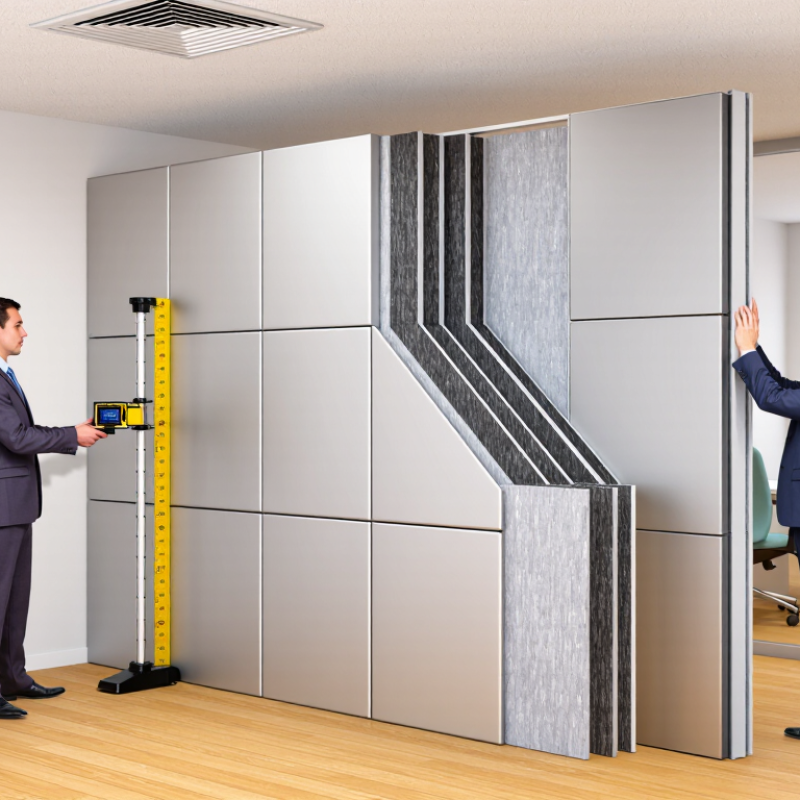
Sound blocking panels are often misunderstood. Their purpose is to reduce sound transmission, not merely soften a room’s echo. Dense, airtight barriers work differently from lightweight acoustic absorbers. A panel may improve speech privacy, yet it cannot make a thin wall soundproof.
Real-world results depend on the entire room. Gaps around sockets, doors, ceiling edges, and ventilation paths can carry sound around a panel. Low-frequency noise from footsteps, bass, or machinery is especially stubborn.
I have learned that a beautifully installed panel can disappoint when the shared wall remains flexible. Measure the problem before buying: note the noise type, timing, direction, and strongest locations. A simple recording helps, but it cannot replace an independent laboratory rating.
Check the panel’s tested performance, thickness, mounting method, and coverage area. Ask whether the data describes sound absorption or transmission loss; these are not interchangeable. Installation needs continuous seals and secure fixing, while heavy systems may require structural review. Do not expect a removable panel to solve vibrations traveling through floors or pipes. Even careful estimates can be wrong. Room geometry, furniture, and weather may change what you hear. Treat product claims as evidence to verify, not promises to accept.
Identifying the Noise Source and Required Sound Reduction
How to Choose the Best Sound Blocking Panels?
Identifying the noise source is more important than choosing a panel first. Airborne noise travels through doors, walls, ceilings, and ventilation openings. Impact noise travels through building structures. Echoes are different again. They usually require sound absorption, not sound blocking. A sound level meter can reveal the problem. Record levels near the source and inside the affected room. The difference shows the reduction you may need. Do not rely on listening alone. Human judgment can be surprisingly inconsistent.
The World Health Organization’s 2018 Environmental Noise Guidelines recommend road traffic exposure below 53 dB Lden and 45 dB Lnight. For workplace noise, NIOSH recommends an 85 dBA limit over eight hours, using a 3 dB exchange rate. These figures help define practical targets. However, panel ratings from ASTM E90 or ISO 10140 laboratory tests may not match field performance. Flanking paths, air gaps, thin doors, and ceiling voids can reduce results. One overlooked gap can ruin an expensive installation. This is where specifications often become too optimistic.
Tips: Identify the dominant frequency when possible. Low-frequency vibration needs mass and isolation. High-frequency speech may respond better to sealing and absorption. Check the complete test report, not only a marketing number. Compare the panel’s rated reduction with your measured baseline. Recheck the room after installation. The result may be uneven, and that is worth admitting.
How to Choose the Best Sound Blocking Panels?
Identifying the noise source and the approximate sound reduction required is the first step in selecting an appropriate acoustic treatment.
The chart compares representative A-weighted sound levels with a 45 dBA target for a quieter occupied space. Required reduction is calculated in decibels; real-world results depend on room size, distance, reverberation, construction, and whether the treatment blocks, absorbs, or isolates the noise.
Matching Panel Design to Room Conditions and Installation Needs
How to Choose the Best Sound Blocking Panels?
Choosing sound blocking panels starts with the room, not the product photograph. Blocking and absorbing are different jobs. Dense barriers reduce sound transmission, while porous panels mainly control reflections. In practice, a thin wall panel may improve speech clarity without stopping corridor noise. That distinction prevents expensive disappointment. The World Health Organization’s Environmental Noise Guidelines for the European Region recommend bedroom noise below 30 dB LAeq indoors at night. Surface panels alone rarely achieve that target.
Match panel design to the room’s surfaces and sound source. Meeting rooms with glass, tile, and bare desks need strong mid-frequency absorption for clearer speech. Check laboratory results measured under ASTM C423 or ISO 354. An NRC value near 0.80 indicates useful average absorption, but it does not describe every frequency. Low-frequency noise may still pass through walls. A wider air gap behind the panel can improve lower-frequency absorption. It also requires careful mounting.
Installation conditions matter just as much. For transmission control, inspect doors, ceiling joints, outlets, and wall edges first. Small gaps can weaken an otherwise heavy assembly. ISO 16283-1 provides methods for measuring airborne sound insulation in completed buildings. I have seen attractive panels fail because installers ignored the door gap. A perfect layout is not always a quiet room. Measure background noise before ordering, and test one installed section before covering the entire space.
Assessing Cost, Safety, Durability, and Overall Performance
Choosing the best sound blocking panels requires more than comparing prices. Start by identifying the noise source, room size, and wall construction. A panel that absorbs echoes may not block loud voices or machinery effectively. During a recent studio improvement, I learned this difference after installing attractive panels that reduced reverberation but barely changed outside noise.
Cost should include installation, maintenance, and possible replacement. Cheap materials can lose shape, collect dust, or release unpleasant odors over time. Check the panel’s fire-resistance documentation and material safety information. Reliable suppliers should provide test results from recognized laboratories. Avoid products with vague claims such as “complete silence.” That promise deserves caution.
Durability depends on surface strength, moisture resistance, and mounting quality. In a busy office, panels should tolerate regular cleaning and accidental contact. Performance data should explain absorption ratings, tested frequencies, and installation conditions. These details make comparisons more meaningful. I also prefer panels with replaceable covers, although this feature can raise the initial cost. Measure the wall carefully, then leave enough space around doors, vents, and electrical fixtures. Poor placement can weaken results. Even high-performing panels may disappoint when installed against the wrong surface or used in an untreated ceiling. A small test area is often worth the effort before ordering for the entire room.