What Are the Best China Sound Panels for Walls?
Choosing the best sound panels for walls requires more than comparing colors, prices, and thicknesses. A panel that looks impressive may absorb mid-frequency speech but leave footsteps, bass, and mechanical hum largely untouched. Room size, wall construction, ceiling height, furniture, and reverberation time all influence the result.
The World Health Organization’s Environmental Noise Guidelines recommend indoor sound levels below 35 dB in classrooms during teaching periods. That target shows why acoustic comfort deserves measured attention, not guesswork. Grand View Research’s Acoustic Panels Market report also indicates continued global demand for architectural acoustic products, driven by offices, schools, restaurants, studios, and residential spaces. Yet market growth does not guarantee quality. Product claims still need testing.
Leo Beranek, a widely respected acoustician and former MIT professor, defined noise simply: “Noise is unwanted sound.” His words remain useful when evaluating sound panels for walls. The goal is not to make a room unnaturally silent. It is to control reflections, improve speech clarity, and reduce listener fatigue. Small details matter. A bare conference wall can create a sharp echo across a polished table. Fabric-wrapped panels may soften that reflection within the seating zone. Not always, though. Poor placement can waste money, and thin decorative panels may deliver limited low-frequency control. This guide examines absorption ratings, materials, installation patterns, fire considerations, sustainability, and real-world performance. It also questions a common assumption: the most expensive panel is not automatically the best choice.
Wall Sound Panel Types in China: PET, Fiberglass, Wood, and Fabric Systems
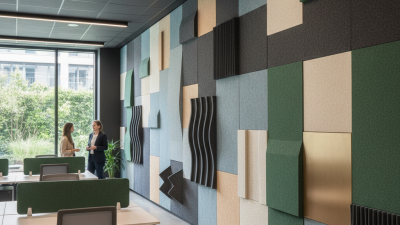
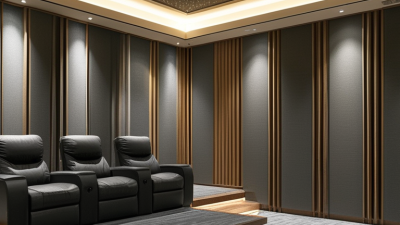
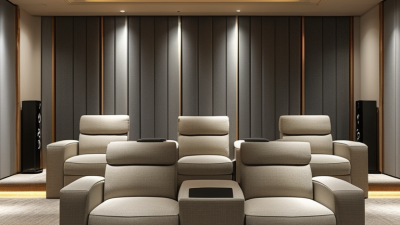
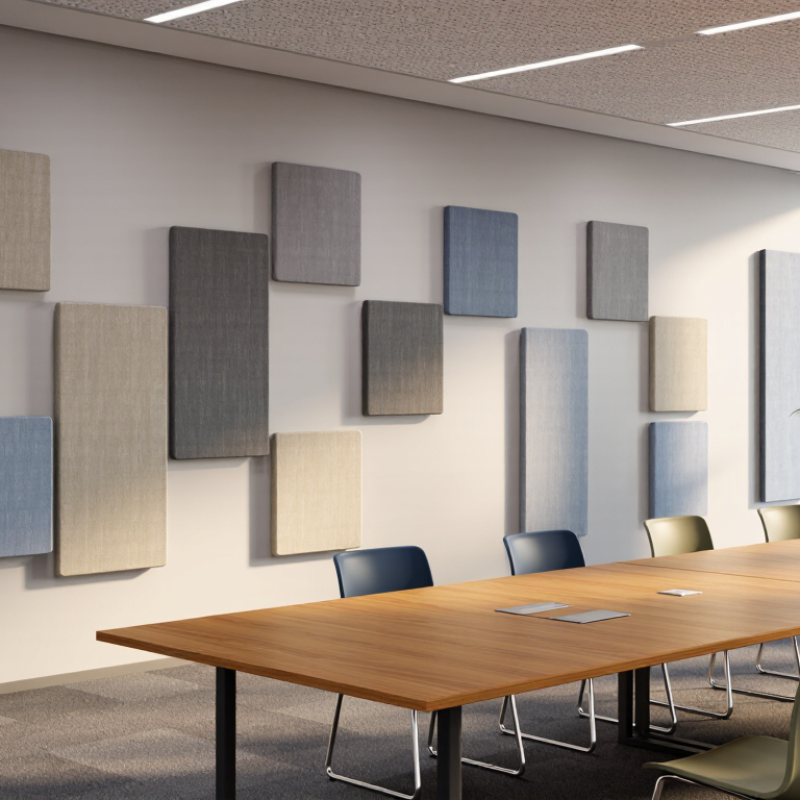
China offers several practical wall sound panel systems, but each suits a different acoustic problem. PET panels are lightweight, clean, and easy to cut into geometric shapes. They absorb mainly mid and high frequencies, making them useful in offices, classrooms, and meeting rooms. Fiberglass panels usually provide stronger absorption across a wider frequency range. They work well in studios, cinemas, and noisy workspaces. Their exposed edges need careful protection.
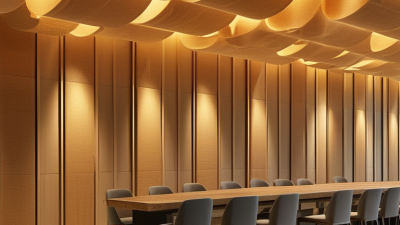
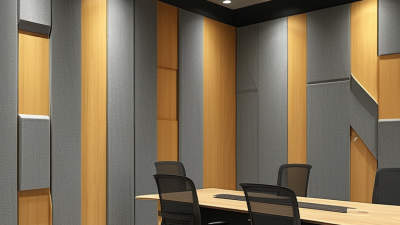
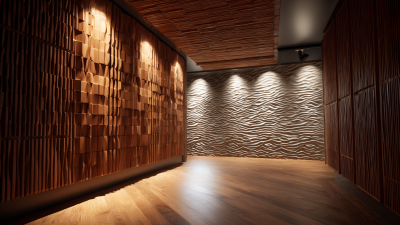
Wood panels add warmth and visual rhythm. Slatted or perforated designs can combine reflection with absorption when installed over an acoustic backing. They may not control low-frequency noise alone. Fabric systems offer flexible colors, replaceable covers, and a softer appearance. They often use a dense acoustic core behind the fabric. In real projects, installers sometimes choose a beautiful panel that performs poorly after installation. That mistake is easy to make.
Tips: Request independent test reports, not only product claims. Check the absorption rating, panel thickness, core density, and mounting gap. A small air space can improve performance. Confirm fire performance for your building requirements. Ask for samples under real lighting. Also inspect surface consistency, edge finishing, and packaging before shipment. No panel is perfect. Room shape, furniture, and ceiling height still affect the final result.
Typical Sound Absorption of China Wall Sound Panel Types
Representative mid-frequency absorption performance for common PET, fiberglass, wood, and fabric acoustic systems.
Higher values indicate stronger sound absorption. The figures are typical representative values based on commonly used commercial constructions; actual performance varies with panel thickness, density, perforation, air gap, and installation method.
How NRC 0.75–1.00 Ratings Compare Across Chinese Acoustic Wall Panels
What Are the Best China Sound Panels for Walls?
When comparing Chinese acoustic wall panels, NRC 0.75–1.00 is a useful starting point, not a complete verdict. NRC 0.75 usually means strong absorption for speech, meetings, and general office noise. NRC 1.00 suggests very high absorption under laboratory conditions. The distinction matters. NRC is calculated from selected frequencies, typically 250, 500, 1,000, and 2,000 Hz. It may not show how well a panel controls deep bass or sharp equipment noise.
A practical comparison should examine the panel core, surface, thickness, and installation gap. PET fiber panels often perform well in mid and high frequencies, especially with a small air space behind them. Mineral-based panels can provide stable absorption, but their edge treatment and surface finish require careful inspection. Perforated wood panels may balance reflection and absorption, while their backing material strongly affects the final rating. Ask for independent test reports using ASTM C423 or ISO 354 methods. Do not rely only on a sales sheet.
A panel rated NRC 0.90 may outperform an NRC 1.00 product in a real room if it covers more wall area. Room shape, ceiling height, furniture, and mounting quality all change results. Not always. I would also question ratings achieved only with generous laboratory spacing. That detail is easy to miss. The best choice is the panel whose tested performance matches the room’s actual noise problem, budget, and installation conditions.
Choosing Panel Thickness: 25–50 mm for Mid- and High-Frequency Control
Wall panels made in China can offer practical acoustic control, but thickness deserves careful attention. For mid- and high-frequency problems, 25–50 mm panels are common working ranges. A 25 mm panel can reduce speech reflections, keyboard noise, and sharp flutter echoes. It suits offices, bedrooms, and small recording spaces. The effect is audible.
A 50 mm panel usually absorbs more efficiently across the upper midrange. It can soften vocal harshness and reduce reflections from glass or painted walls. An air gap behind the panel often improves performance. Even a 50 mm panel cannot replace proper bass treatment. Thickness alone is not enough. Material density, airflow resistance, mounting distance, and panel coverage also matter.
My first room used thick panels but left large reflective gaps. The result sounded quieter, yet still strangely bright.
Experienced installers normally place panels at first-reflection points, ceiling reflection zones, and selected rear-wall areas. Measure the room before ordering. A phone recording may reveal problems, but it cannot replace acoustic measurements. Request absorption data, manufacturing consistency records, surface durability details, and applicable fire-safety documentation from the supplier. Check samples in your own room, because laboratory results may not match the final installation. I would also inspect the edges and backing material. Small construction details can affect long-term performance. In some rooms, 25 mm panels are sufficient; in others, 50 mm panels with an air gap deliver better control. The right choice remains partly experimental.
Comparing Installation, Coverage, and Cost per Square Meter in China
What Are the Best China Sound Panels for Walls?
Choosing sound panels in China depends on installation, wall coverage, and cost per square meter. In practical room projects, fabric-wrapped panels usually install quickly with adhesive, clips, or a light timber frame. Slat panels often need more accurate cutting and stronger wall anchors. Uneven concrete walls can add labor and delay.
Coverage changes the result more than many buyers expect. Treating only one narrow wall may reduce echo but leave speech reflections elsewhere. For offices, studios, and meeting rooms, 30% to 60% wall coverage is a useful starting range. Ceiling height, furniture, windows, and room volume still matter. Acoustic foam can be light and simple, but it may offer weaker fire performance and a less durable surface.
Indicative China pricing may range from about RMB 120 to RMB 500 per square meter, excluding installation and shipping. Basic polyester panels cost less, while thicker mineral-fiber or wood-faced systems require a larger budget. Installation may add RMB 30 to RMB 150 per square meter. Prices vary by thickness, edge treatment, quantity, and city. Ask for fire-rating documents, absorption test data, density, and installation drawings. My early estimates were too optimistic when wall repairs were included. That mistake taught me to calculate usable coverage, not just panel area. Small gaps also matter. A lower price is not always lower project cost.
What Are the Best China Sound Panels for Walls? - Comparing Installation, Coverage, and Cost per Square Meter in China
| Panel Type |
Typical Thickness |
Typical NRC Range |
Recommended Wall Coverage |
Installation Method |
Installation Difficulty |
Indicative Supply Cost |
Indicative Installed Cost |
Best Use |
| PET Felt Acoustic Panel |
9–24 mm |
0.25–0.75 |
30–60% of the main reflection walls |
Adhesive, clips, or concealed screws |
Low |
¥90–¥280/m² |
¥130–¥380/m² |
Offices, classrooms, home studios, meeting rooms |
| Fabric-Wrapped Mineral Wool Panel |
25–50 mm |
0.75–1.10 |
20–50% of wall area, depending on reverberation |
Z-clips, picture-frame rails, or direct fixing |
Medium |
¥180–¥520/m² |
¥260–¥680/m² |
Recording rooms, conference rooms, cinemas, lecture halls |
| Perforated Wood Acoustic Panel |
12–25 mm |
0.45–0.85 |
25–60% of selected wall surfaces |
Metal rails, battens, or mechanical fasteners |
Medium to high |
¥260–¥650/m² |
¥380–¥850/m² |
Hotels, auditoriums, restaurants, premium offices |
| Wood-Slat Acoustic Panel with Absorptive Backing |
21–25 mm |
0.55–0.95 |
30–70% of feature or rear walls |
Screws through backing or mounting battens |
Medium |
¥320–¥780/m² |
¥450–¥980/m² |
Restaurants, hospitality interiors, executive rooms, studios |
| Polyester Fiber Baffle or Vertical Panel |
12–24 mm |
0.30–0.80 |
20–50% of wall area, with gaps between panels |
Aluminium tracks, clips, or suspension hardware |
Low to medium |
¥120–¥360/m² |
¥180–¥480/m² |
Open-plan offices, schools, call centers, multipurpose rooms |
| Slotted MDF or Micro-Perforated Panel |
12–18 mm |
0.35–0.75 |
25–60% of wall area with an acoustic cavity |
Subframe, clips, or concealed screws |
Medium to high |
¥220–¥560/m² |
¥340–¥760/m² |
Commercial interiors requiring a rigid, cleanable finish |
| Acoustic Foam Panel |
25–50 mm |
0.35–0.75 |
20–50% of reflection points |
Spray adhesive, double-sided tape, or clips |
Low |
¥60–¥180/m² |
¥90–¥260/m² |
Budget treatment for small studios and equipment rooms |
Notes:
NRC values are typical laboratory ranges for comparable panel constructions and may vary with thickness, mounting method, air gaps, and test standards. Costs are indicative China-market ranges in RMB per square meter for standard sizes and colors, including ordinary material handling; installed costs include basic labor and standard accessories but exclude design, scaffolding, taxes, freight, complex substrates, and fire-rated upgrades. Acoustic panels reduce reverberation and reflected sound; they do not provide the same function as a soundproofing wall assembly.