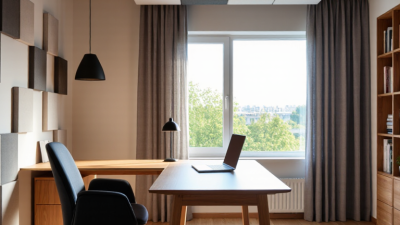
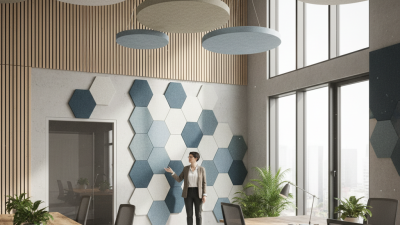
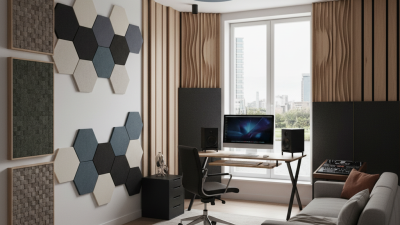
Why Choose Acoustic Tiles for Better Sound Control?

In busy offices, classrooms, restaurants, and recording spaces, sound rarely stays where it begins. A phone call travels across glass, footsteps strike hard floors, and nearby conversations overlap. This is why acoustic tiles have become a practical part of modern sound-control strategies. They absorb reflected sound, reduce reverberation, and help rooms feel calmer without major structural changes.

The World Health Organization’s Environmental Noise Guidelines for the European Region link excessive noise with sleep disturbance, stress, and cardiovascular risks. Workplace benchmarking from the Leesman Index also consistently identifies noise and distraction as important factors affecting employee experience. These findings support a simple design principle: acoustic comfort is not merely decorative. It influences concentration, communication, and perceived wellbeing. However, the exact result depends on room volume, surface coverage, tile thickness, frequency range, and installation quality. Small details matter.

A professionally selected acoustic tiles system can target ceiling reflections, wall echoes, or localized speech noise. Laboratory results, such as Noise Reduction Coefficient values tested under ASTM C423, provide useful comparison points. Yet laboratory performance is not the whole story. A tile rated highly in a test chamber may perform poorly when coverage is too limited or gaps weaken the layout. It is not a magic fix. Site measurements and practical listening still matter. Designers should combine acoustic tiles with soft furnishings, thoughtful zoning, and controlled background noise. The best solution is usually quieter, not silent.
Why Choose Acoustic Tiles for Better Sound Control?

What Are Acoustic Tiles and How Do They Work?

Acoustic tiles are wall or ceiling panels designed to control reflected sound. They are usually made from porous fibers, foam, or other sound-absorbing materials. Their open structure lets sound waves enter the surface. Inside, air movement creates small amounts of friction. This converts part of the sound energy into heat. Less energy returns to the room.

Unlike soundproofing barriers, acoustic tiles do not completely stop noise from passing through walls. They mainly reduce echoes, harsh reflections, and lingering speech sounds. In a meeting room, this can make voices clearer. In a home office, it may soften keyboard noise and room reverberation. Tile thickness, density, surface texture, and placement all affect performance. Testing standards can help, but real rooms often behave differently. I have seen attractive installations perform poorly because every panel was placed on one wall. That result was disappointing, but useful.

Tips: Place tiles near strong reflection points, such as opposite speakers or above a desk. Leave some ceiling and wall areas untreated for balance. Use a clap test before and after installation. A shorter echo is a practical sign of improvement. Do not cover vents, lights, or safety equipment. Small gaps may also reduce the visual uniformity, yet they can improve coverage across the room. Measure the room and listen carefully before buying many panels. One mistake is treating absorption as decoration. It should respond to the room’s actual sound problems.

Why Choose Acoustic Tiles for Better Sound Control? - What Are Acoustic Tiles and How Do They Work?

Data Dimension Typical Data or Range How It Supports Sound Control
Primary Function Sound absorption and reverberation control Reduces reflected sound energy and helps make speech, music, and other audio clearer.
Common Core Materials Polyester fiber, mineral fiber, fiberglass, or acoustic foam Porous and fibrous structures convert part of the sound-wave energy into a small amount of heat through air movement and friction.
Typical Thickness 12–50 mm (approximately 0.5–2 in) Thicker tiles generally provide greater absorption, especially at lower frequencies, when the material and installation are comparable.
Typical Noise Reduction Coefficient (NRC) Approximately 0.50–0.95, depending on construction and mounting A higher NRC indicates stronger average absorption across selected mid-frequency test bands; it does not represent sound blocking.
Sound Absorption Class Commonly Class B, A, or equivalent performance categories Classification systems summarize measured absorption performance; the exact class must be confirmed from product test results.
Best Frequency Range Mid and high frequencies, generally around 500–4,000 Hz This range includes much of the frequency content important for speech intelligibility and common indoor reflections.
Low-Frequency Performance Limited for thin, directly mounted tiles; improved with greater thickness, air gaps, or bass-focused designs Lower-frequency control requires more absorber depth or a suitable air cavity behind the tile.
Recommended Air Gap Approximately 50–100 mm where installation space allows An air gap can improve absorption at lower frequencies by increasing the effective distance sound travels through the absorber.
Typical Installation Areas Walls, ceilings, suspended panels, partitions, and targeted reflection points Strategic placement can reduce flutter echo, excessive reverberation, and strong early reflections.
Reverberation-Time Impact Can reduce reverberation time when sufficient coverage is installed The actual improvement depends on room volume, hard-surface area, tile coverage, thickness, and placement.
Speech Intelligibility Generally improved in reflective rooms when reverberation and echo are reduced Less reflected sound helps separate direct speech from delayed or overlapping sound.
Sound Isolation Capability Low when used alone Acoustic tiles primarily absorb sound inside a room; they do not replace mass, airtight construction, or isolated assemblies needed to block sound transmission.
Fire-Performance Consideration Varies by facing, core, thickness, and tested assembly Select tiles with documented fire-test ratings appropriate for the intended building and installation location.
Maintenance Usually low; periodic dust removal and inspection are recommended Keeping porous surfaces clean helps preserve appearance and prevents dust buildup from affecting long-term use.
Ideal Applications Offices, classrooms, meeting rooms, studios, restaurants, home theaters, and open-plan interiors They provide a practical way to manage room acoustics without major structural changes.

Note: Performance values are typical ranges for acoustic tile products. Actual results depend on material composition, thickness, mounting method, air gap, surface coverage, and independently verified test data.

How Acoustic Tiles Improve Sound Absorption and Noise Control

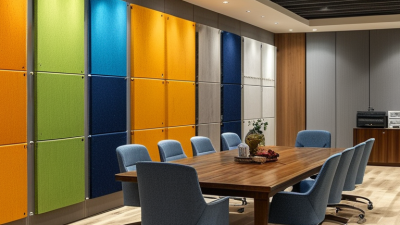
Acoustic tiles improve sound absorption by reducing reflected energy inside a room. Their porous or fibrous cores catch airborne sound and convert part of it into tiny amounts of heat. This softens echoes from speech, footsteps, and equipment. The change is noticeable. In a meeting room, voices become less harsh after wall reflections are controlled. In classrooms, students may hear instructions more clearly. However, tiles do not block all noise. That distinction matters.

Noise control depends on placement, thickness, surface coverage, and the room’s existing construction. Ceiling tiles can reduce overhead reflections, while wall panels target flutter echoes between parallel surfaces. Panels installed near speaking areas often provide stronger speech clarity than scattered decoration.

A professional assessment should check reverberation, background noise, and gaps around doors. Measurements using reverberation time can support better decisions than appearance alone. Yet a beautiful layout may still perform poorly if coverage is too limited.

A practical installation leaves ventilation, lighting, and access points unobstructed. It also combines absorption with sealing, solid doors, and quieter equipment when noise travels between rooms.

I once assumed more panels always meant better control. That was too simple. Excessive absorption can make a space feel unnaturally dull, especially in music or collaborative settings.

Test a small area first, listen from several seats, and adjust the layout. The room’s actual sound problem should guide the material choice, even when color is tempting.

Which Materials and Designs Are Used in Acoustic Tiles?

Why Choose Acoustic Tiles for Better Sound Control?

Acoustic tiles use porous or fibrous materials to reduce reflected sound. Common options include PET felt, mineral wool, fiberglass, and wood wool. Each material absorbs different frequency ranges. Thicker tiles usually manage lower frequencies more effectively. A thin panel may improve speech clarity, but it cannot solve every noise problem.

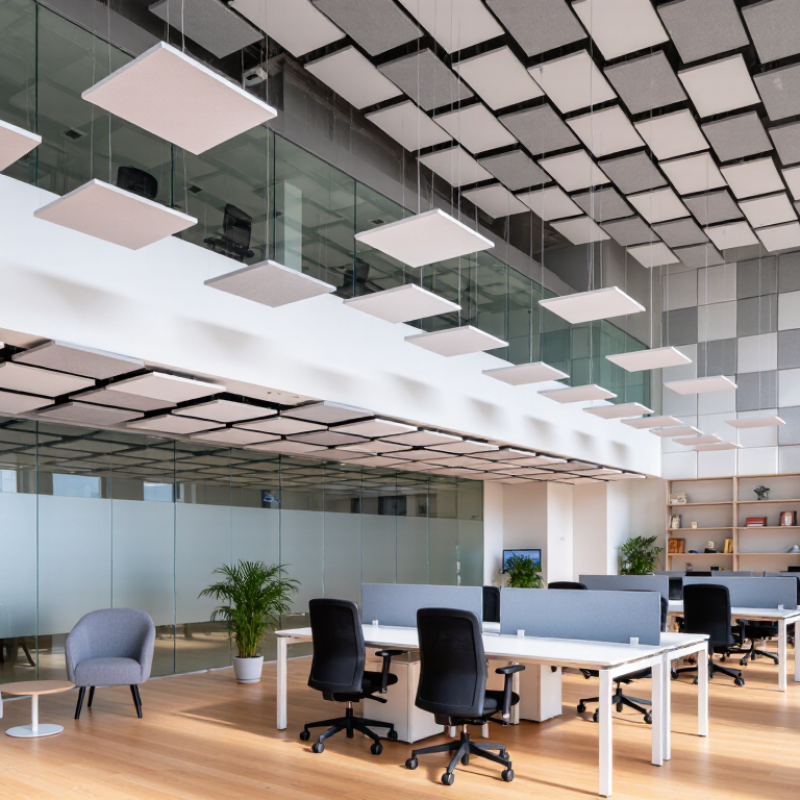
Design also affects performance. Fabric-wrapped panels offer a soft, professional appearance for offices and studios. Perforated wood tiles combine visible texture with sound absorption. Slatted systems can scatter reflections while leaving small air gaps behind them. Ceiling clouds and hanging baffles help control sound in tall rooms. In my experience, placing panels at reflection points often works better than covering one wall completely. Results depend on room size, furniture, and background noise. The choice is rarely perfect.

Tips: Check certified absorption data before buying. Look for installation guidance, fire performance, moisture resistance, and cleaning requirements. Leave an air gap behind wall tiles when possible. It can improve low-frequency absorption. Do not judge performance by appearance alone. A beautiful tile may perform modestly. Test a small area first, then listen from the seating position. Some rooms still need bass control, door seals, or quieter equipment. That part is easy to overlook.

Why Choose Acoustic Tiles for Better Sound Control?

Typical Noise Reduction Coefficient (NRC) ranges by acoustic tile material. Higher NRC values indicate stronger absorption of mid-frequency sound.

Fiberglass and mineral-fiber tiles commonly provide the highest absorption ranges, while PET felt and wood-wool tiles combine sound control with flexible visual design. Actual performance varies with thickness, perforation, cavity depth, mounting method, and the surrounding room surface.

Where Are Acoustic Tiles Commonly Installed?

Acoustic tiles are commonly installed in offices, classrooms, studios, restaurants, and healthcare spaces. In open offices, they soften conversations, keyboard noise, and chair movement. Meeting rooms benefit from clearer speech and fewer distracting reflections. Placement matters.

Installers often suspend tiles from ceilings or mount them on walls near strong reflection points. In classrooms, ceiling tiles above desks can reduce echo and help students hear instructions. Libraries use them to control footsteps and quiet page-turning sounds. Restaurants may place tiles above dining areas, where hard floors and glass surfaces create a sharp, tiring noise. Moisture-resistant materials are safer for kitchens and humid rooms.

Homes also use acoustic tiles in media rooms, home studios, and shared living areas. During room assessments, I look at ceiling height, wall surfaces, furniture, and the position of speakers or workstations. A tile alone cannot block sound between rooms. It mainly absorbs sound inside the space. That distinction is easy to miss. Before installation, check tested absorption data, cleaning requirements, fire performance, and local building guidance. Reliable projects also leave ventilation and lighting accessible. I have seen attractive tile layouts fail because they covered only one small reflection area. A more balanced design usually performs better, though perfection is unrealistic in active rooms.

What Factors Should Guide Your Choice of Acoustic Tiles?

Why Choose Acoustic Tiles for Better Sound Control?

What factors should guide your choice of acoustic tiles? Start with the room. Measure its volume, hard surfaces, occupancy, and dominant noise sources. A glass meeting room needs different treatment from a quiet bedroom. Speech usually occupies the mid-frequency range, while mechanical noise may require broader absorption. Do not judge performance by appearance alone.

Check the Noise Reduction Coefficient, or NRC, tested under ASTM C423. A higher NRC generally indicates stronger average sound absorption. Yet NRC can hide weak low-frequency performance. Ask for octave-band results under ISO 354 when voices, ventilation, or footsteps matter. The World Health Organization’s 2018 night-noise guidance recommends indoor bedroom levels below 30 dB(A) for good sleep. Tiles cannot achieve that target alone, but ceiling and wall coverage can reduce reflections and perceived loudness.

Installation details often decide the result. An air gap behind a tile can improve low-frequency absorption. Edge treatment also matters. Use fire-rated, low-emission materials where building codes and occupancy require them. Moisture resistance is essential in humid rooms. Inspect the mounting system, cleanability, and replacement process before purchasing. Acoustic comfort is personal. A heavily treated room may feel strangely dull, and I have seen designers overcorrect after measuring only one location. Test a small area first, compare before-and-after readings, and leave room for revision.