Choosing a reliable Led Ceiling Light supplier in China requires more than comparing prices or browsing polished product photos. Global buyers must examine optical performance, driver quality, thermal design, certification records, production capacity, and after-sales support. A ceiling fixture may look excellent in a showroom, yet perform poorly after months of heat exposure. That difference matters in offices, hotels, retail spaces, and residential projects.
Lighting researcher Dr. Mariana Figueiro has stated, “Light is the most powerful synchronizer of the human circadian system.” Her observation highlights why responsible buyers should assess more than brightness. Color temperature, glare control, flicker performance, and visual comfort also influence real spaces. The suppliers selected for this guide are evaluated through practical criteria, including manufacturing experience, export capability, customization options, quality-control procedures, and documented compliance with relevant market requirements. Samples and factory communication remain important evidence. Trust should not depend on promises alone.
Still, no ranking can predict every project outcome. A strong supplier for a commercial installation may not suit a small residential order. Some manufacturers offer impressive specifications but limited technical support. Others communicate well but lack consistent batch quality. This guide recognizes those limitations. It is a practical starting point, not a final purchasing decision. By comparing China’s top 10 Led Ceiling Light suppliers, buyers can identify dependable partners, ask sharper questions, and reduce avoidable risks before signing a contract. Performance should be verified. Even experienced buyers sometimes overlook small details.
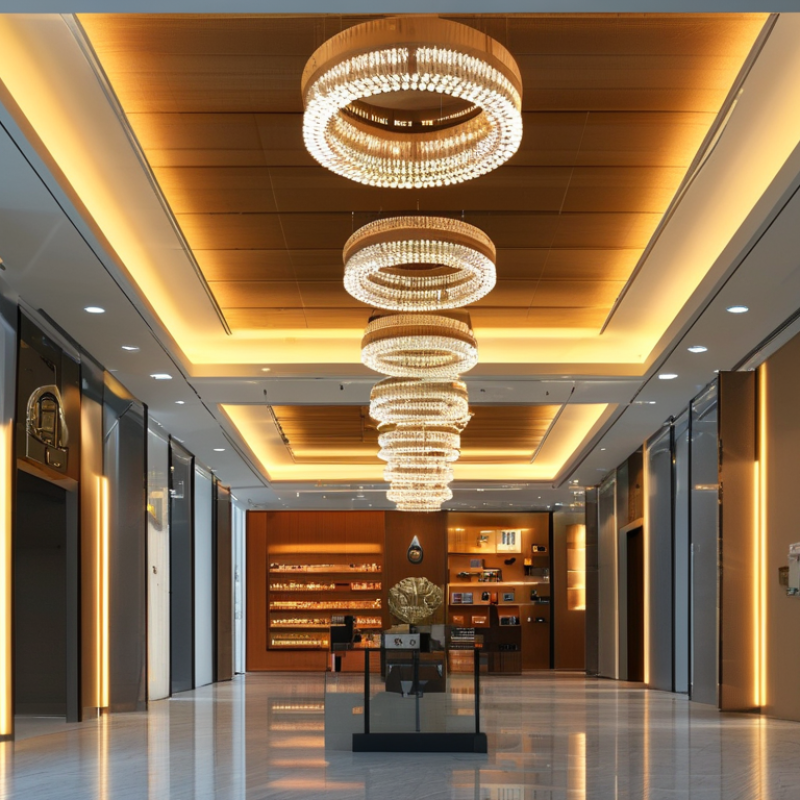
China’s LED ceiling light industry is advancing through higher efficiency, better thermal design, and flexible export production.
Many commercial fixtures now target over 100 lm/W system efficacy.
That figure matters.
However, buyers should confirm how manufacturers measure it. Chip efficacy can look impressive, while the complete fixture performs less efficiently.
Request test data for the finished product, including lumen output, color temperature, power factor, and heat stability. An integrating sphere report offers stronger evidence than a catalogue claim.
Global demand is growing for low-energy retrofits in offices, warehouses, hotels, and residential developments.
Projects increasingly require dimming, occupancy sensors, tunable white light, and compatibility with local control systems.
Demand also varies by region. Warm white lighting suits hospitality spaces, while cooler tones often support retail and industrial environments.
Suppliers serving international buyers must understand these practical differences.
During supplier evaluations, inspect samples after extended operation.
Check the diffuser, aluminum heat sink, driver noise, flicker, and installation clips.
Small parts matter.
A recurring mistake is choosing the highest lumen figure without checking glare or lifetime performance.
Some factories still prioritize low prices over consistent color and driver reliability. That trade-off deserves careful questioning.
Compare production records, quality procedures, warranty terms, and replacement support before selecting among China’s leading LED ceiling light suppliers.

For global buyers, a useful top-ten ranking needs measurable evidence, not factory promises. I rank each supplier against the same product specification and test sample. CRI 80+ is the entry point, not the finish line. I check the reported average, test method, and R9 performance under warm white LEDs. A dated laboratory report should match the exact model number. Samples matter.
IP ratings require equal discipline. IP20 may suit a dry bedroom, while IP44 or higher can suit areas near bathroom splash zones. The rating should reference IEC 60529 testing, with enclosure details and test conditions available. I also inspect seals, diffuser joints, cable entries, and mounting surfaces. A high number on a datasheet means little if production changes afterward. That happens.
For certifications, I verify scope, issuing body, validity, and whether the document covers the supplied luminaire. Market access requirements differ, so CE, UKCA, RoHS, and electrical safety evidence are not interchangeable. I award points for traceability, factory quality controls, warranty response, and consistent sample results. Independent inspections can expose weak packaging or loose terminals. My weighting is not perfect. A polished file is not proof of reliable field performance. Unresolved gaps remain visible in the final ranking.
China’s top ten LED ceiling-light suppliers mainly serve residential, commercial, and hospitality projects. Their portfolios usually include 12W–48W flush mounts, recessed panels, sensor fixtures, and tunable-white models. Many factories report monthly capacities between 20,000 and 200,000 units, although figures often include several product categories. Capacity is not perfectly comparable.
Public supplier disclosures show typical efficacies of 100–180 lumens per watt, with aluminum housings, flicker-controlled drivers, and emergency options available. The International Energy Agency reports that LEDs already dominate global lighting sales, while the U.S. Department of Energy’s 2023 SSL report highlights continuing gains in efficacy and controls. These trends explain the shift from basic ceiling lamps toward dimmable and connected designs.
Export coverage is broad. The leading ten supplier groups commonly ship to Europe, North America, Southeast Asia, the Middle East, Australia, and Latin America. China Customs data identifies lighting products as a major electrical export category, but customs codes do not isolate ceiling lights precisely. That limitation matters. Buyers should verify factory audit records, LM-80 or TM-21 evidence, driver test reports, warranty terms, and actual shipment history. Some suppliers appear strong on catalog breadth but weaker on sustained production. A sample order can reveal more than a polished website.
| Supplier Profile | Main Product Focus | Typical Power Range | Estimated Monthly Capacity | OEM/ODM Capability | Common Certifications | Primary Export Markets | Typical Lead Time | Best Suited For |
|---|---|---|---|---|---|---|---|---|
| Supplier Profile 01 | Residential flush-mount and surface LED ceiling lights | 12–48 W | 80,000–150,000 units | Custom housing, color temperature, packaging, and logo service | CE, RoHS, EMC, LVD | Europe, Southeast Asia, Middle East | 25–40 days | Retailers and residential lighting distributors |
| Supplier Profile 02 | Slim panel ceiling lights and back-lit fixtures | 18–60 W | 100,000–220,000 units | Die-cast and plastic frame customization; private labeling | CE, RoHS, SAA, CB | Australia, Europe, North America | 30–45 days | Importers requiring high-volume standard designs |
| Supplier Profile 03 | Decorative LED ceiling lamps and modern home fixtures | 24–72 W | 30,000–80,000 units | Custom shapes, finishes, dimensions, and lighting effects | CE, RoHS, EMC, LVD | Europe, North America, Gulf countries | 35–55 days | Interior projects, hotels, and design-led retailers |
| Supplier Profile 04 | Smart ceiling lights with dimming and remote control | 18–72 W | 40,000–100,000 units | App integration, remote control, tunable white, and RGB options | CE, RoHS, FCC, RED | North America, Europe, East Asia | 35–60 days | Smart-home distributors and e-commerce sellers |
| Supplier Profile 05 | Commercial LED ceiling fixtures for offices and shops | 24–80 W | 60,000–140,000 units | Beam angle, sensor, emergency, and control-system customization | CE, RoHS, ENEC, IEC test reports | Europe, Middle East, Latin America | 30–50 days | Commercial contractors and lighting wholesalers |
| Supplier Profile 06 | High-lumen industrial and warehouse ceiling fixtures | 60–150 W | 20,000–60,000 units | Optical distribution, housing, driver, and mounting customization | CE, RoHS, TUV, CB | North America, Europe, Australia | 40–65 days | Factories, logistics facilities, and engineering firms |
| Supplier Profile 07 | IP-rated LED ceiling lights for bathrooms and humid areas | 15–45 W | 50,000–120,000 units | IP44–IP65 protection, anti-corrosion finishes, and custom sizes | CE, RoHS, IP test reports, LVD | Europe, Southeast Asia, Middle East | 30–50 days | Bathroom suppliers, hotels, and residential projects |
| Supplier Profile 08 | LED ceiling fans with integrated lighting modules | 18–45 W lighting module | 15,000–45,000 units | Blade, motor, lighting module, remote, and packaging customization | CE, RoHS, ERP, EMC | Australia, North America, Europe | 45–70 days | Home-improvement chains and residential developers |
| Supplier Profile 09 | Recessed and semi-recessed LED ceiling downlights | 7–35 W | 100,000–250,000 units | Cut-out size, trim finish, beam angle, and driver options | CE, RoHS, SAA, IC test reports | Europe, Australia, North America | 25–45 days | Electrical wholesalers and residential construction projects |
| Supplier Profile 10 | Large-format LED ceiling panels for public and institutional buildings | 36–100 W | 40,000–100,000 units | Panel dimensions, lighting controls, emergency kits, and project specifications | CE, RoHS, CB, ENEC | Europe, Middle East, Africa, Latin America | 35–60 days | Government, education, healthcare, and office projects |
Note: Production capacities, lead times, certifications, and export coverage are representative market ranges for comparable Chinese LED ceiling-light manufacturers and should be verified directly before procurement.
China Top 10 LED Ceiling Light Suppliers for Global Buyers
A practical supplier comparison begins with CCT, not appearance. Request 2700K, 3000K, 4000K, and 5000K samples, then verify color consistency with a calibrated meter. CCT tolerance matters because two “4000K” fixtures may look noticeably different. The U.S. Department of Energy’s 2023 Solid-State Lighting R&D Opportunities report records laboratory LED packages above 200 lm/W, but complete fixtures usually deliver less. Check delivered lumens, efficacy, CRI, and power together. A neat spreadsheet can still mislead.
Lifespan claims require evidence. Ask whether 25,000 or 50,000 hours refers to the LED package, driver, or complete fixture. LM-80 testing measures lumen maintenance for LED packages; it does not directly prove fixture life. Request LM-80 files and TM-21 projections, following IES LM-80-21 and TM-21-21 procedures. Compare L70 values, test temperatures, drive current, and sample quantity. Also review warranty terms, replacement responsibility, and exclusions. Three to five years is common, but wording differs sharply. I have seen attractive warranties fail during small projects.
Tips: Order samples before approving the top ten. Record startup time, flicker, heat, color shift, and installation fit. Confirm MOQ by model, CCT, trim, and driver option. A low MOQ may hide higher unit costs. Supplier factories should provide dated test reports, factory addresses, production photos, and traceable sample labels. Reports from recognized laboratories deserve more weight than polished catalog figures. Never treat a single datasheet as final proof.
When comparing China’s top 10 LED ceiling light suppliers, global buyers should inspect compliance before negotiating price. Ask for an IEC 60598 test report matching the exact model, wattage, driver, and installation method. A generic report is not enough. Check the scope.
CE usually depends on the supplier’s Declaration of Conformity and supporting technical files. Request evidence for EMC and low-voltage requirements where applicable. RoHS documents should identify restricted substances and the tested product family. For North American projects, verify an ETL listing, certification number, and product label details. Documents can mislead.
In factory audits, I have seen small changes create major risks. A different diffuser, driver, or housing may require updated testing. Review samples against production drawings, not only product photos. Pricing should include the luminaire, driver, packaging, tooling, inspection, and shipping terms. The cheapest quotation may exclude surge protection or replacement parts. Ask clearly.
Lead time also needs a written breakdown. Separate sample production, certification review, component purchasing, mass production, and final inspection. A practical target may be 7–15 days for samples and 20–45 days for standard orders, but capacity changes by season. Confirm the factory’s daily output and backup component plan. I would also request a sealed pre-production sample. It adds time, yet prevents expensive surprises. Mistakes still happen. A reliable supplier explains them early and records corrective action.
Typical planning benchmarks for global buyers: sample approval usually takes about 7–14 days, standard production about 20–35 days, pre-shipment inspection around 3–7 days, and consolidation or dispatch approximately 5–10 days. Confirm the actual schedule, IEC 60598 documentation, CE and RoHS files, ETL availability, pricing, and production capacity directly with each supplier.
